ValoRep
A mobile application designed to combat toxicity in Valorant by recognizing and rewarding good citizens of the community.
Toxicity is driving players away
Valorant, the popular multiplayer game developed by Riot Games, has faced a persistent problem of toxic behavior exhibited by many of its players. This toxicity can take various forms, including harassment, abuse, hate speech, and cheating, and has a significant impact on the gameplay experience, with severe consequences for a player's well-being:
"I avoid talking and mute everyone, especially when I'm playing poorly."
"I stopped playing the game because I couldn't deal with the toxicity."
"I'm more surprised when I have a nice teammate than a toxic one."
"I had a panic attack. That's when I knew it wasn't healthy to play competitively anymore."
Riot is committed to combatting toxicity and has taken measures such as proactive voice and text moderation and player reporting to address the problem, but toxicity is still prevalent.
How might we combat toxicity and change the game's culture by encouraging and rewarding non-toxic behavior?
A platform to endorse teammates and build reputation
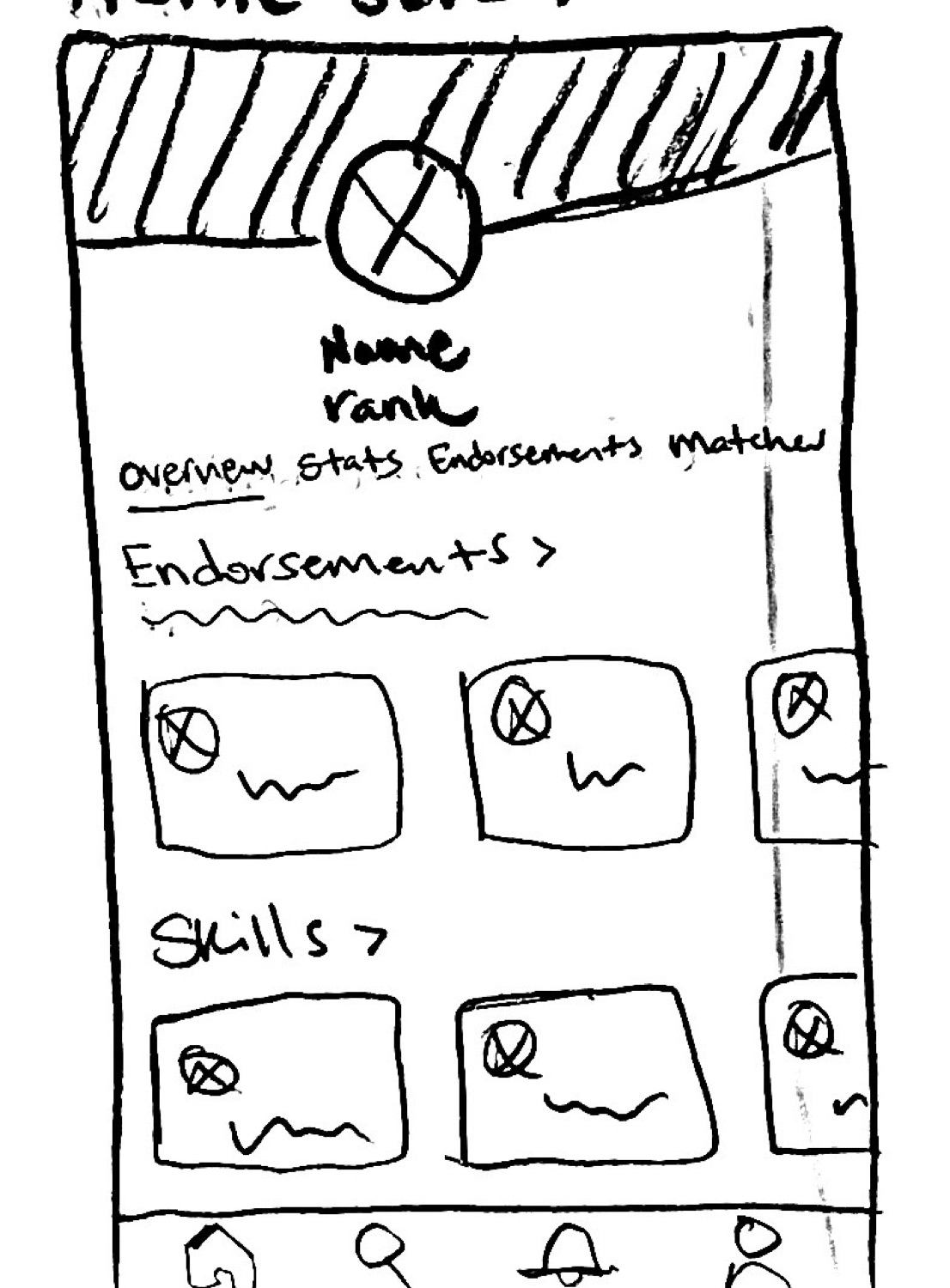
I designed ValoRep, a mobile application that supplements and enhances Valorant's gaming experience by giving players a platform to endorse their teammates and curate their own reputation. The app features public profiles for every player, showcasing their strengths and impact through endorsements from others, as well as skills awarded by the app based on a comprehensive assessment of their gameplay.
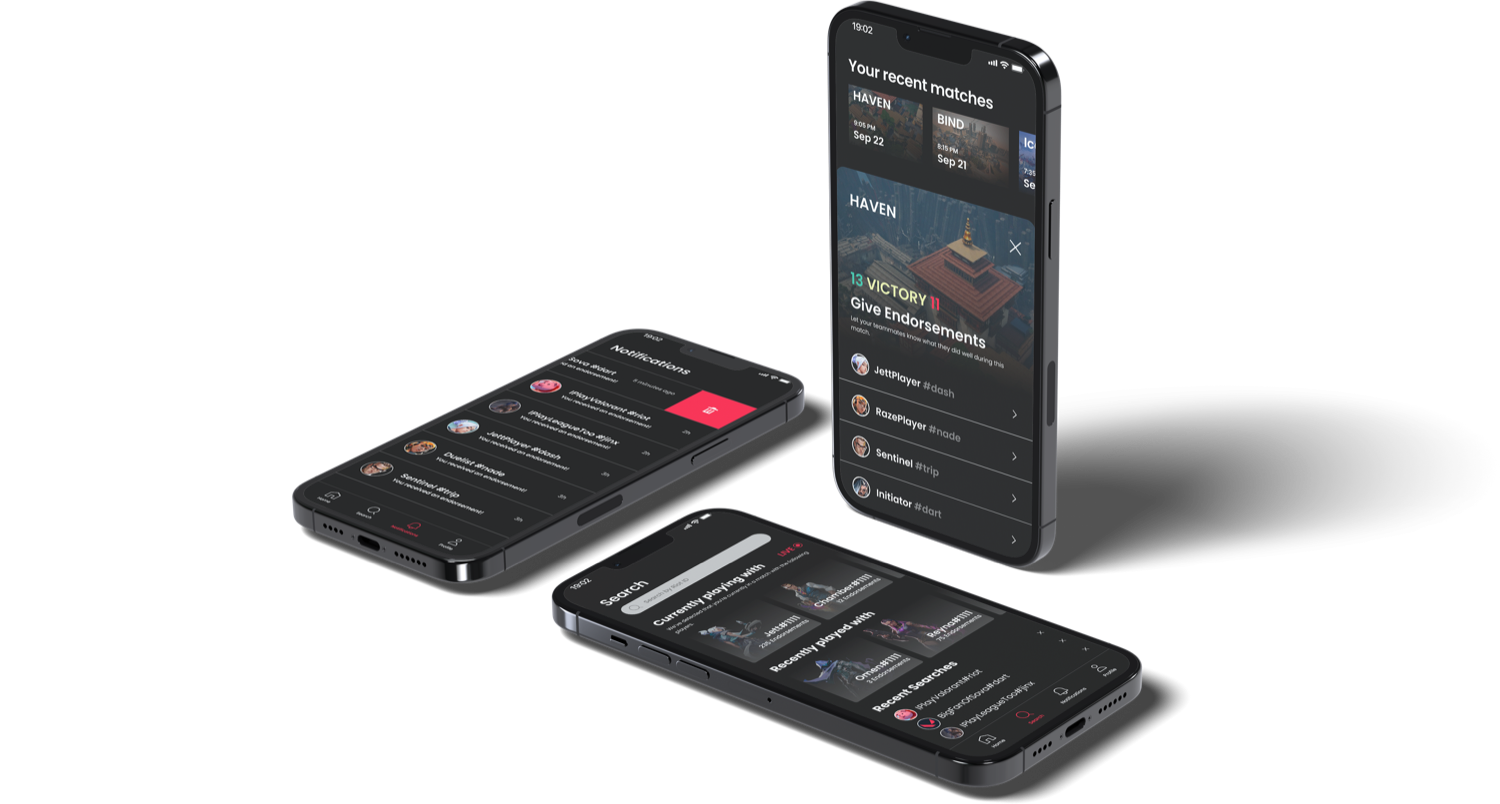
The application has three goals:
Promote positive and non-toxic behavior within the community
The app encourages players to acknowledge and support their teammates. Through gamification, it incentivizes more players to strive for good citizenship and foster a more supportive, appreciative community. By rewarding positive behavior and contributions, ValoRep hopes to promote a culture of positivity and respect.
Recognize and reward good citizens of the community
ValoRep recognizes exceptional players who contribute to the game or community in ways that may not have been previously recognized or valued. These players can then curate their profiles and reputations to showcase their value and contributions to making the community a better place.
Challenge the traditional definition of "impactful" gameplay
ValoRep redefines what it means to have an impact by recognizing and highlighting players' non-conventional contributions. By showcasing the diverse ways players can make a difference, the app hopes to influence the community's understanding of impactful gameplay and foster a more inclusive, appreciative in-game experience.
Validating the problem with data
To gain a better understanding of the problem space, I utilized the insights and data of current Valorant players. By creating a 20-question survey that explored player attitudes toward toxicity, the factors that influence it, the reporting and moderation system, and other related topics, I was able to validate some of my initial hypotheses and gain valuable insight into players' perspectives. Some highlights from the survey:
Going deeper on players' experiences
I then conducted follow-up interviews with some of the survey respondents to get a deeper understanding of their experiences. Some key takeaways:
Players frequently encounter toxic behavior and report it, but lack confidence in the effectiveness of the reporting and moderation system.
Players feel toxicity is often linked to lack of performance, which can stem from the undervaluing of contributions that aren't strictly technical.
Players enjoy giving and receiving positive feedback, since this can improve morale and encourage greater investment in the game.
Despite an emphasis on technical performance, players believe being a good, collaborative, and friendly teammate has the biggest impact on their experience and chances of winning.
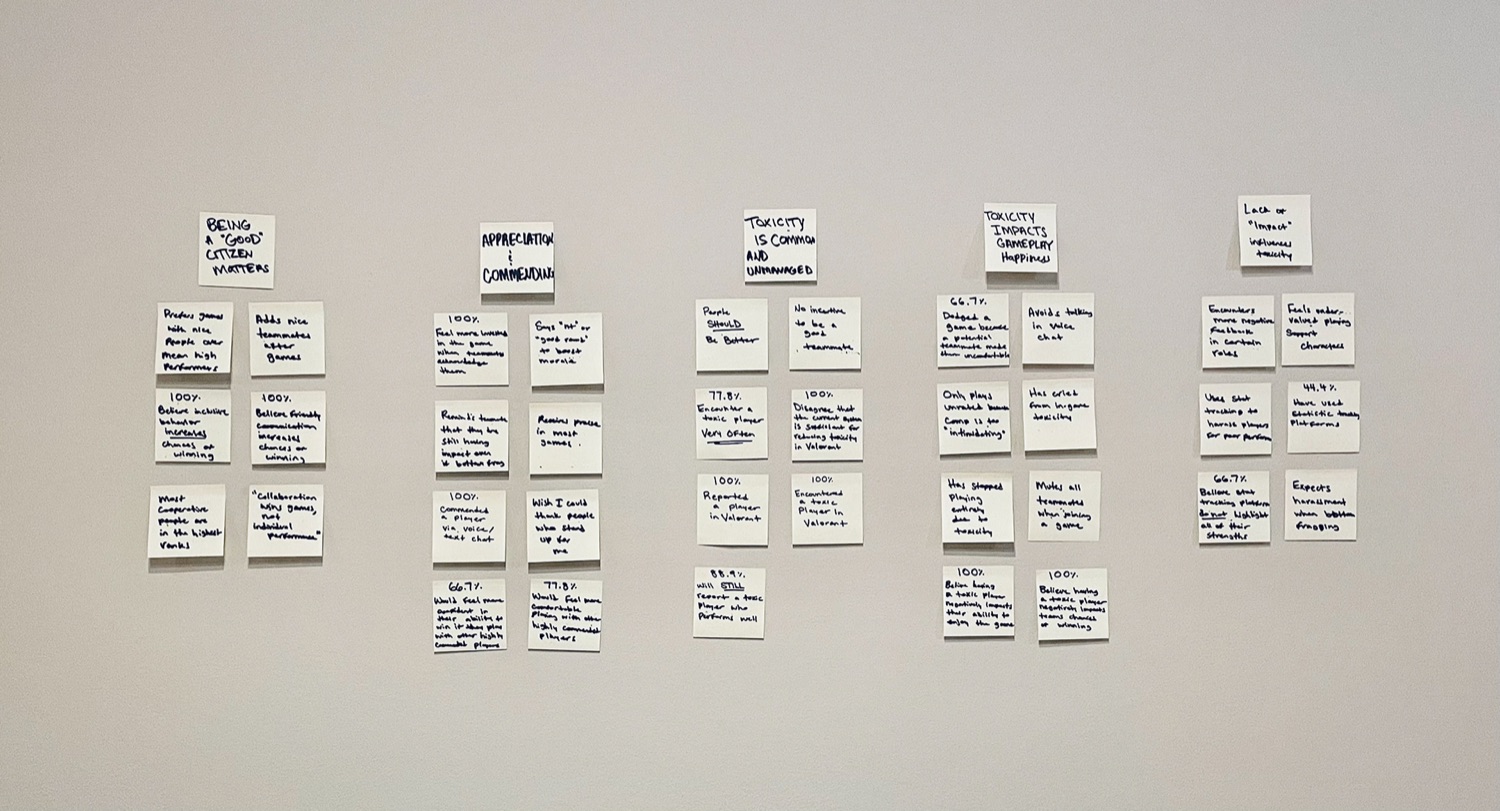
To understand the insights obtained from the survey and interviews, I created an affinity map that helped me visualize and identify the overarching themes of my learnings.
How other games tackle toxicity
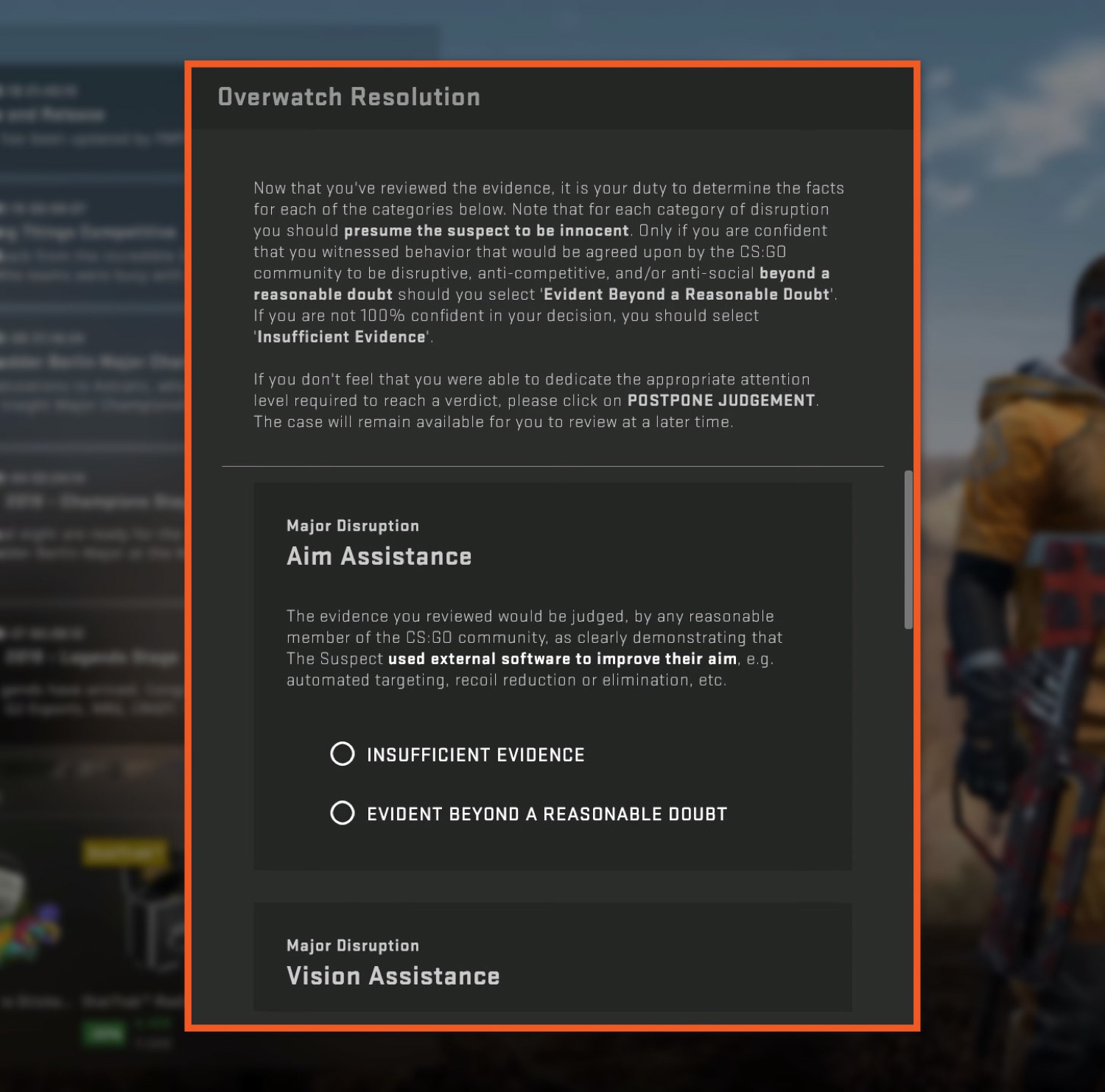
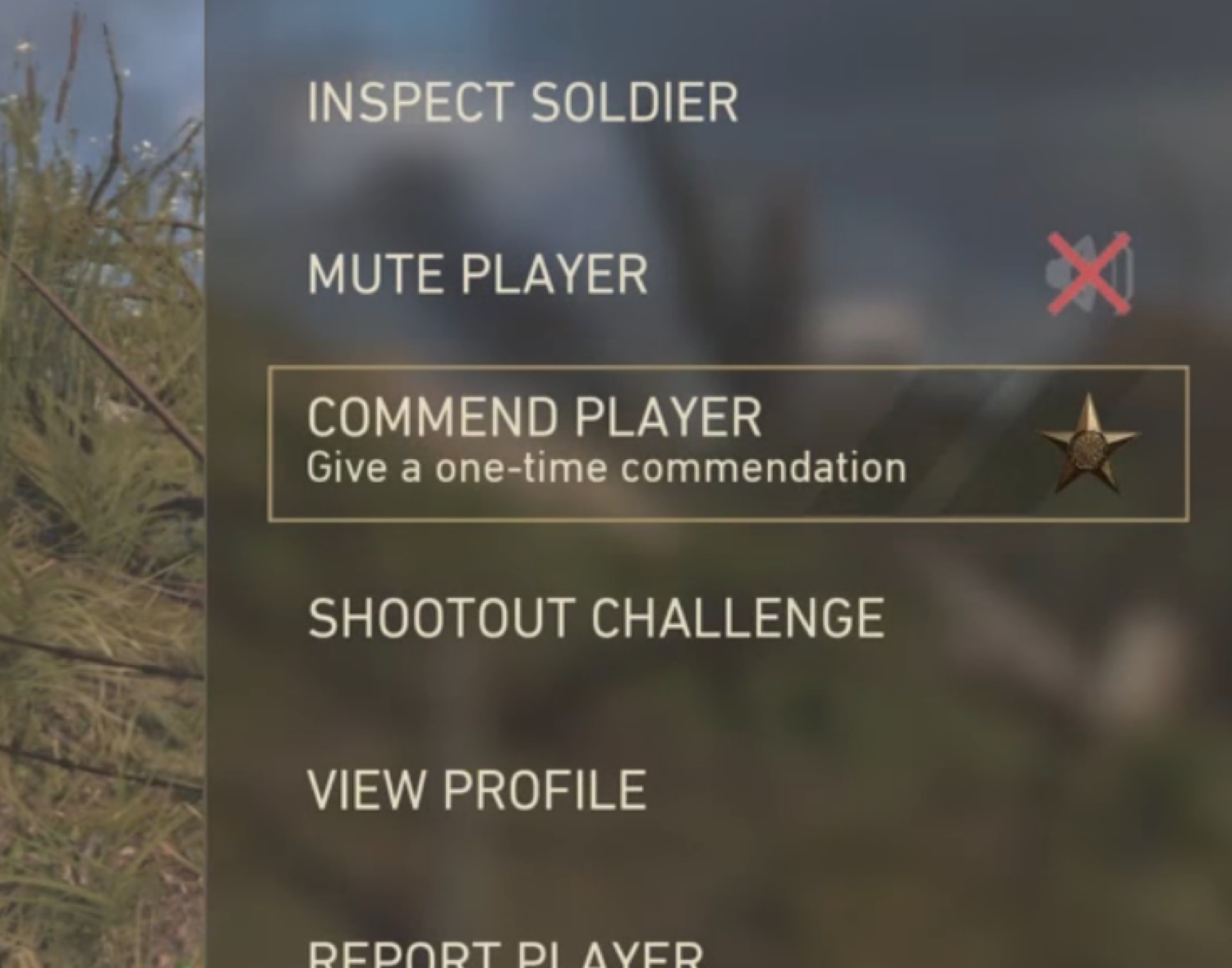
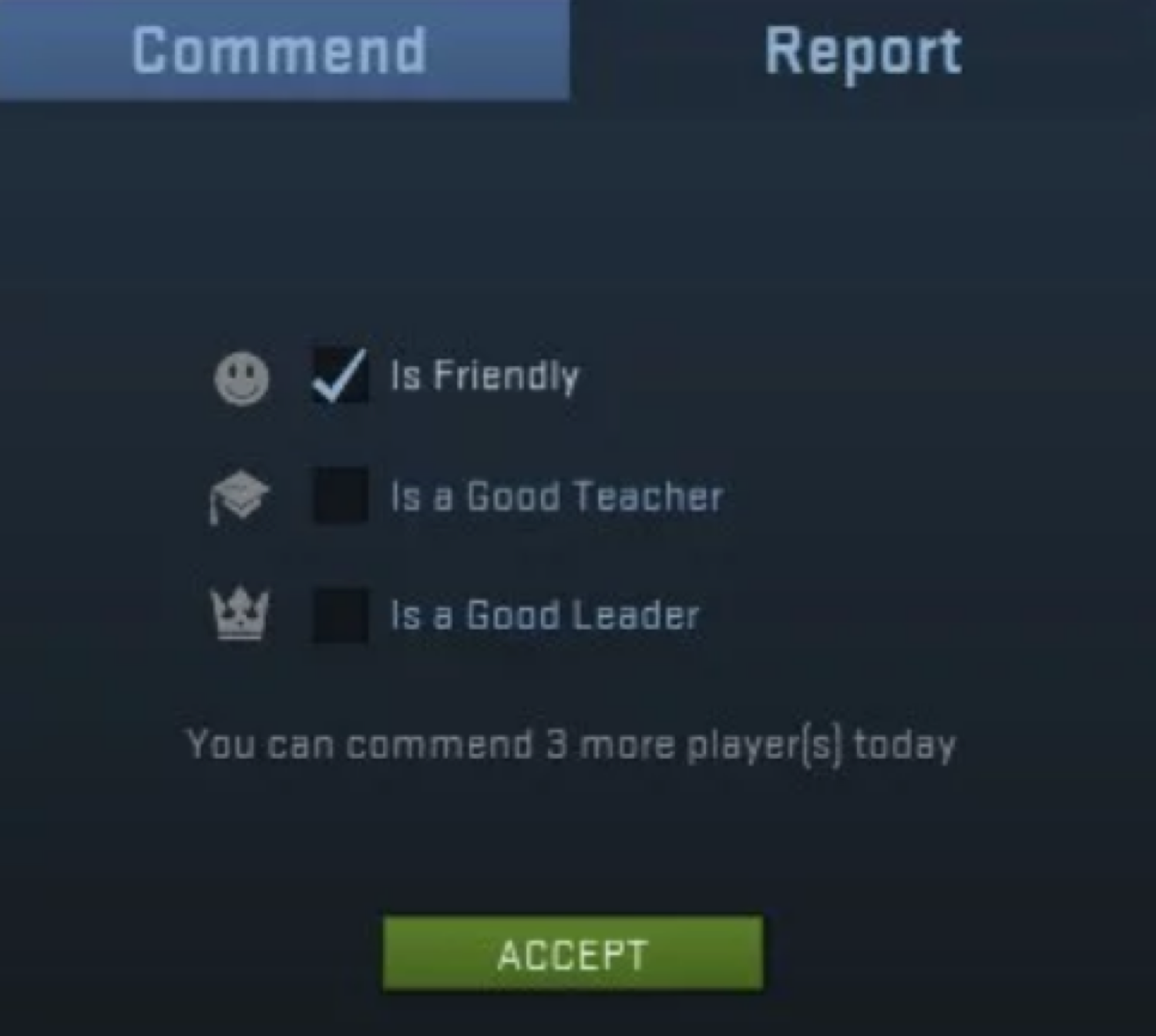
I researched some of the solutions competitors have implemented. While eliminating toxicity entirely is still a challenge for many games, understanding what already exists can provide valuable insights. I looked at three other competitive online FPS games (CS:GO, Overwatch, and Call of Duty) to see how they approach toxicity and promote positive behavior. Below is an overview of features competitors have to combat toxicity that Valorant does not:
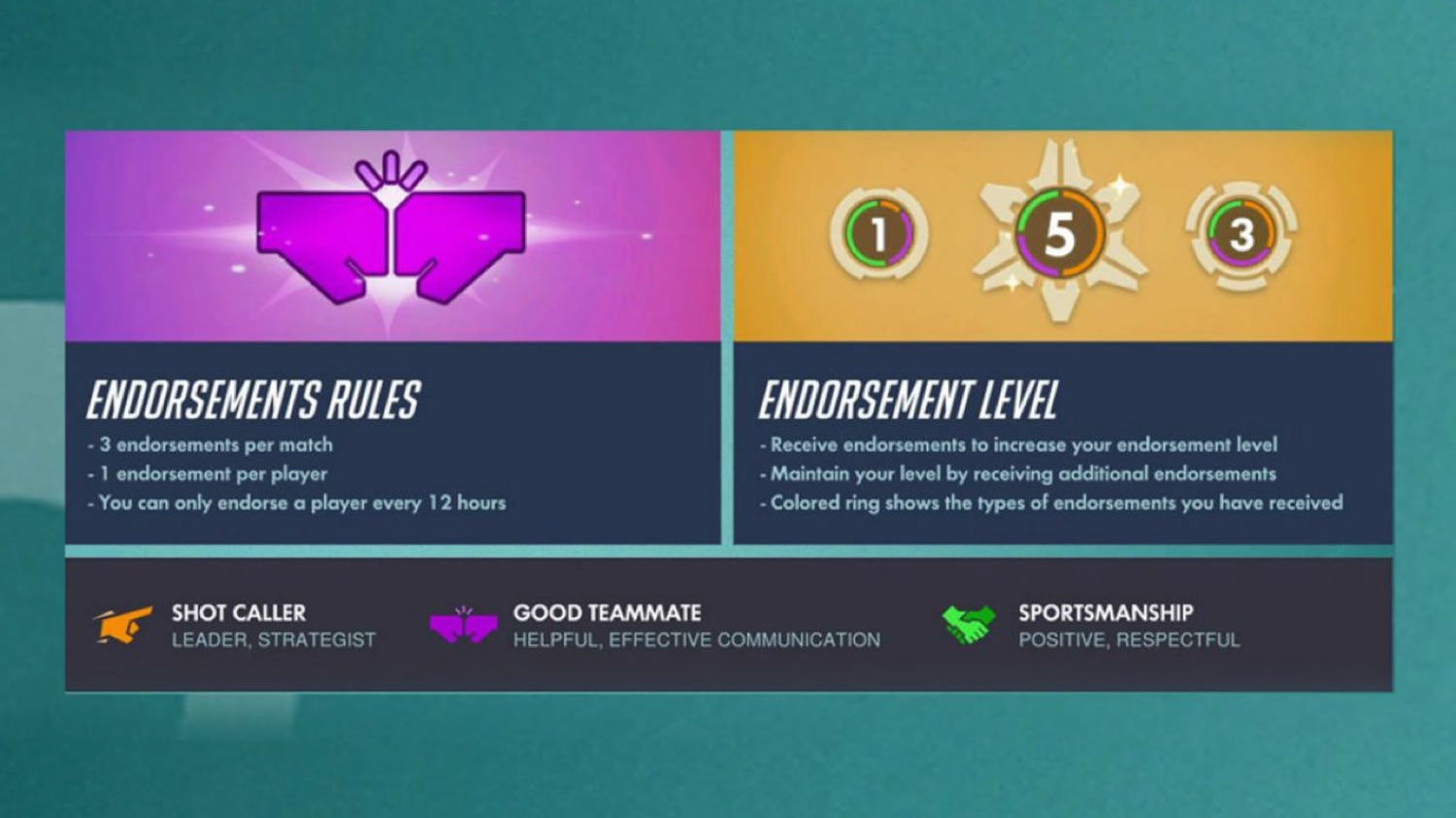
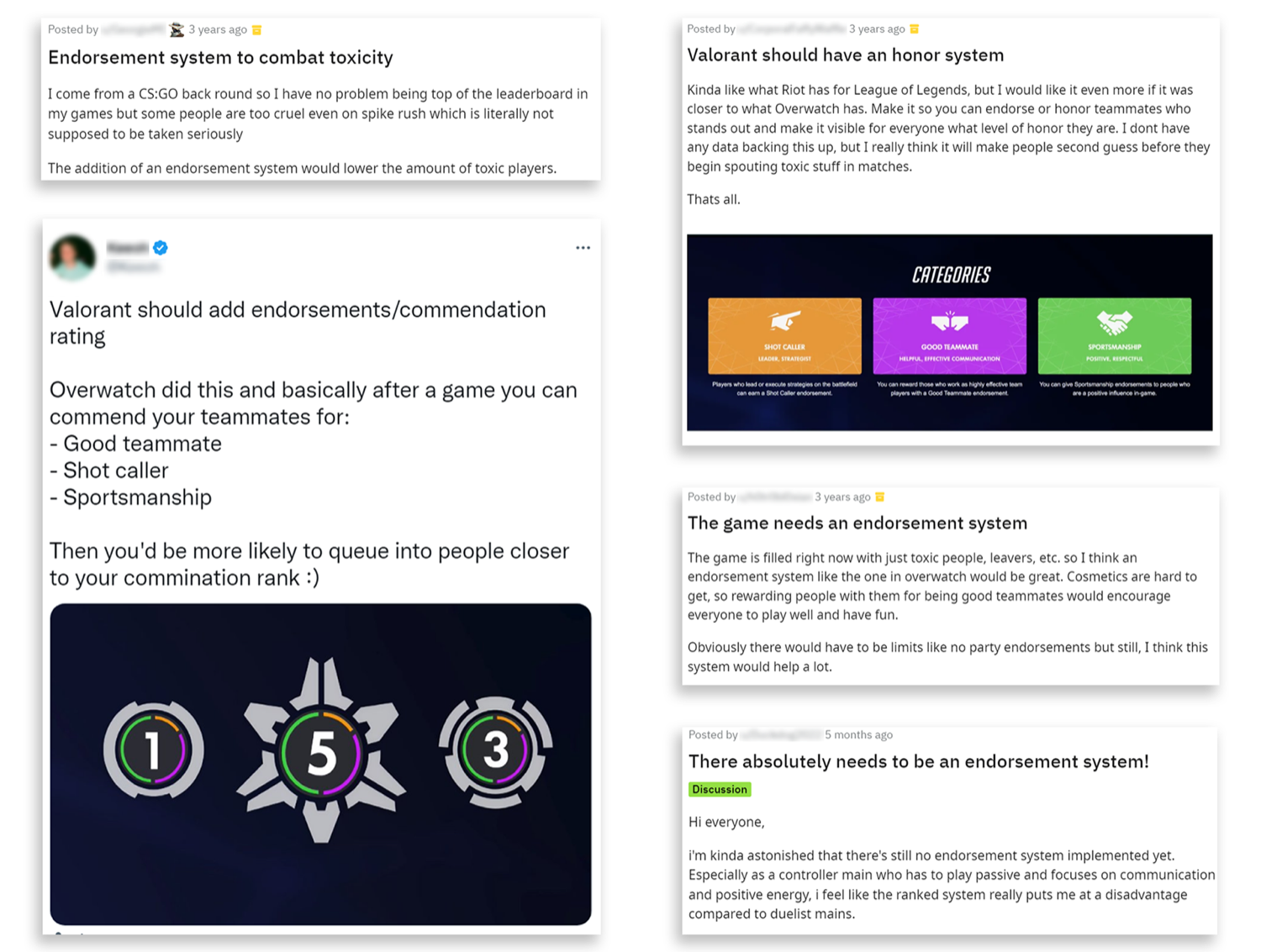
I turned to public forums and found that a significant number of players were requesting an endorsement system similar to the one used in Overwatch. This system lets players endorse their teammates for exhibiting positive behavior (such as good teamwork or sportsmanship) and rewards them for doing so.
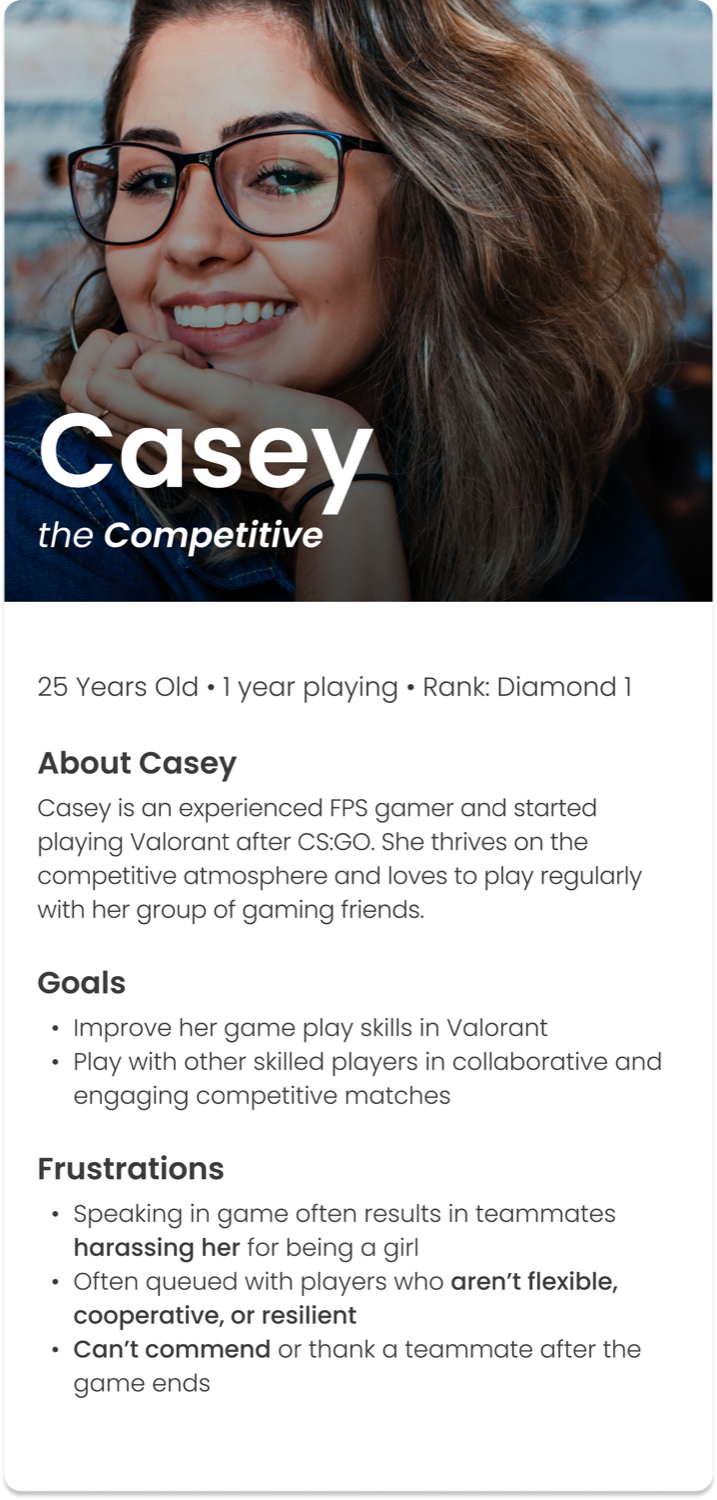
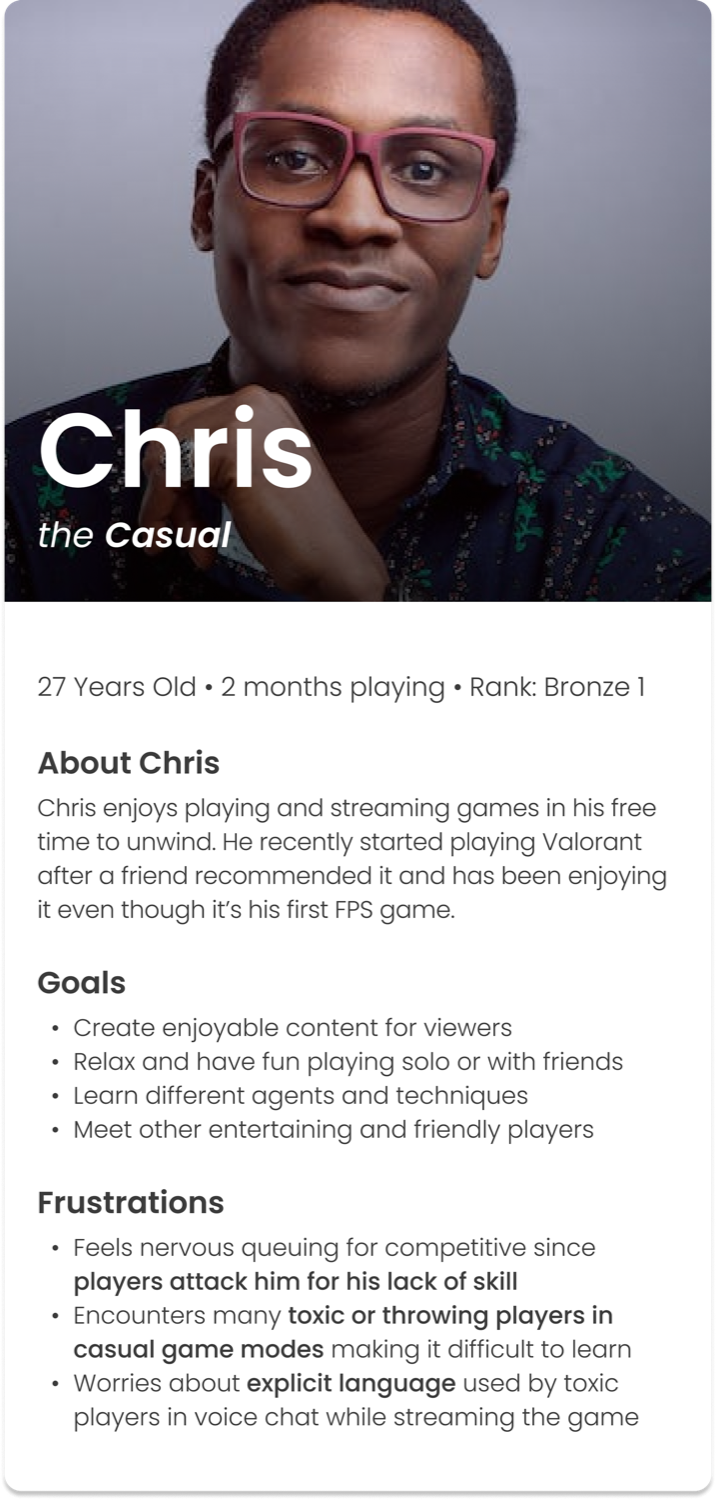
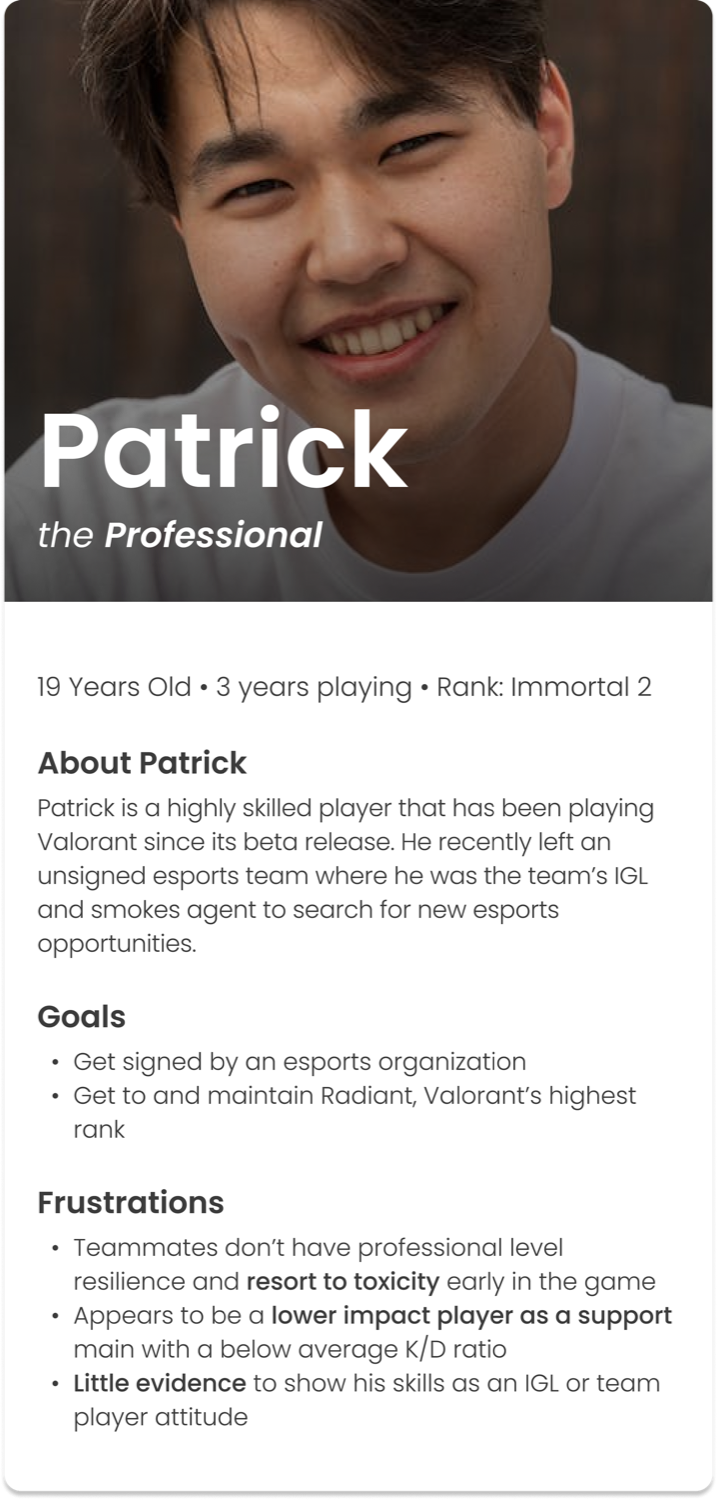
Who we're designing for
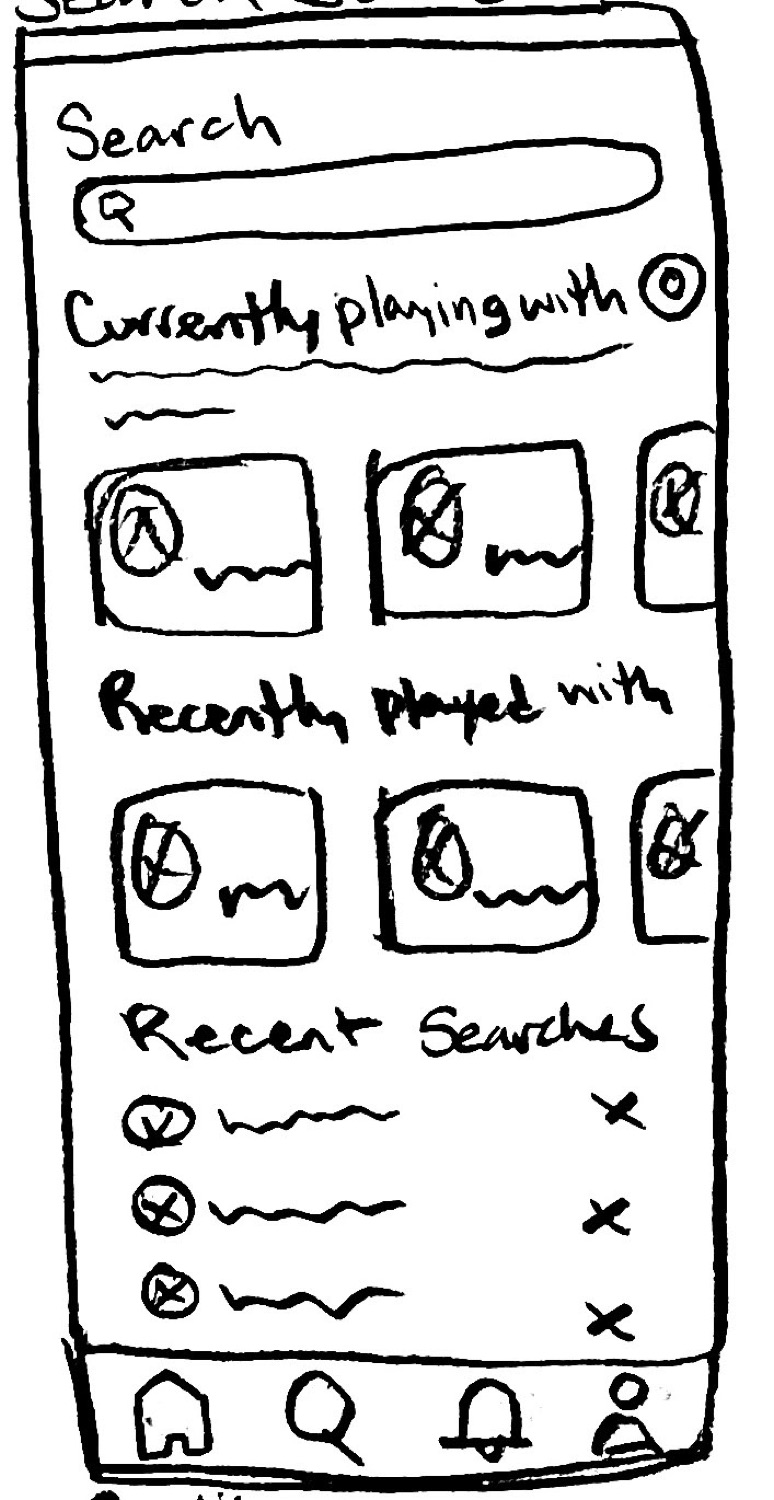
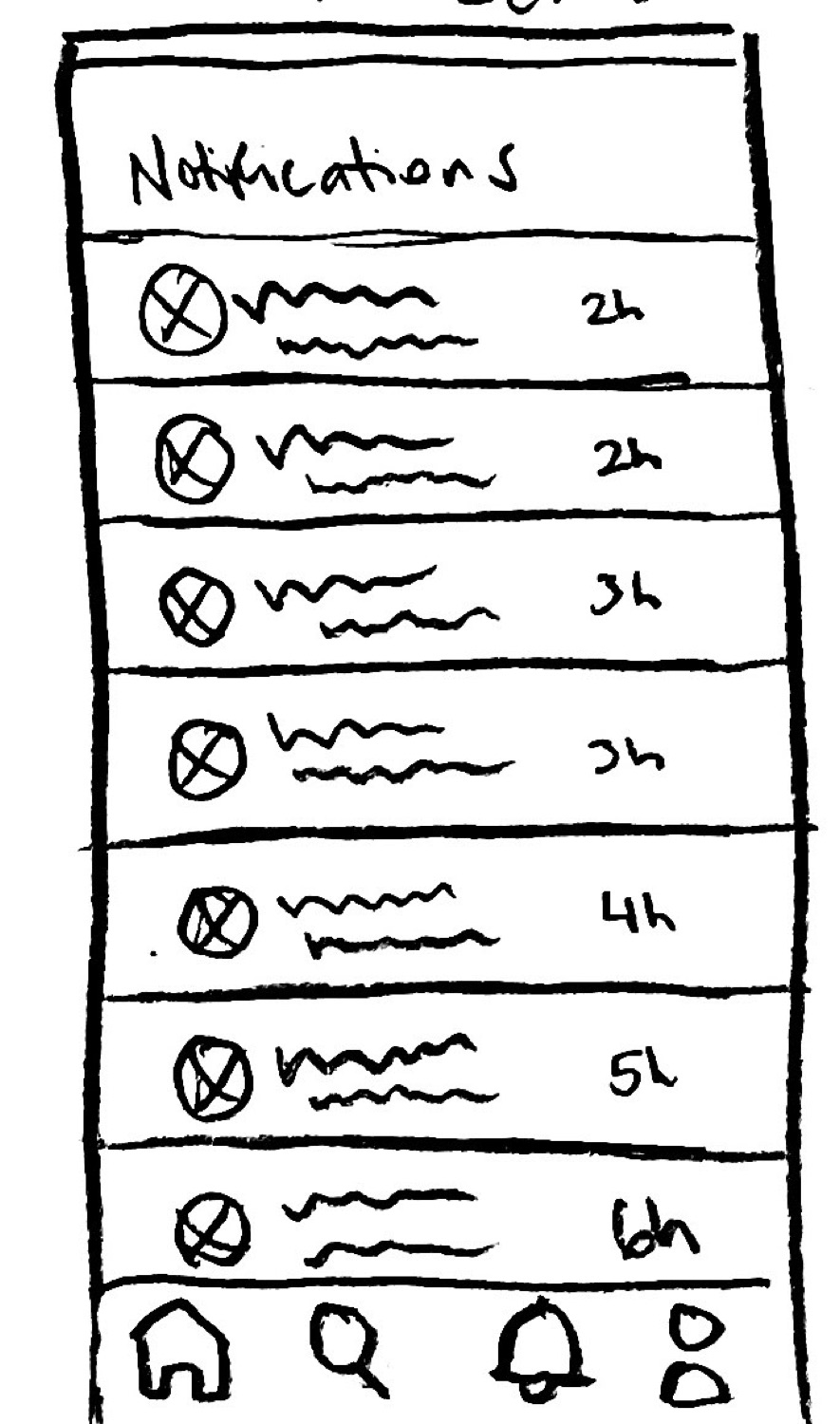
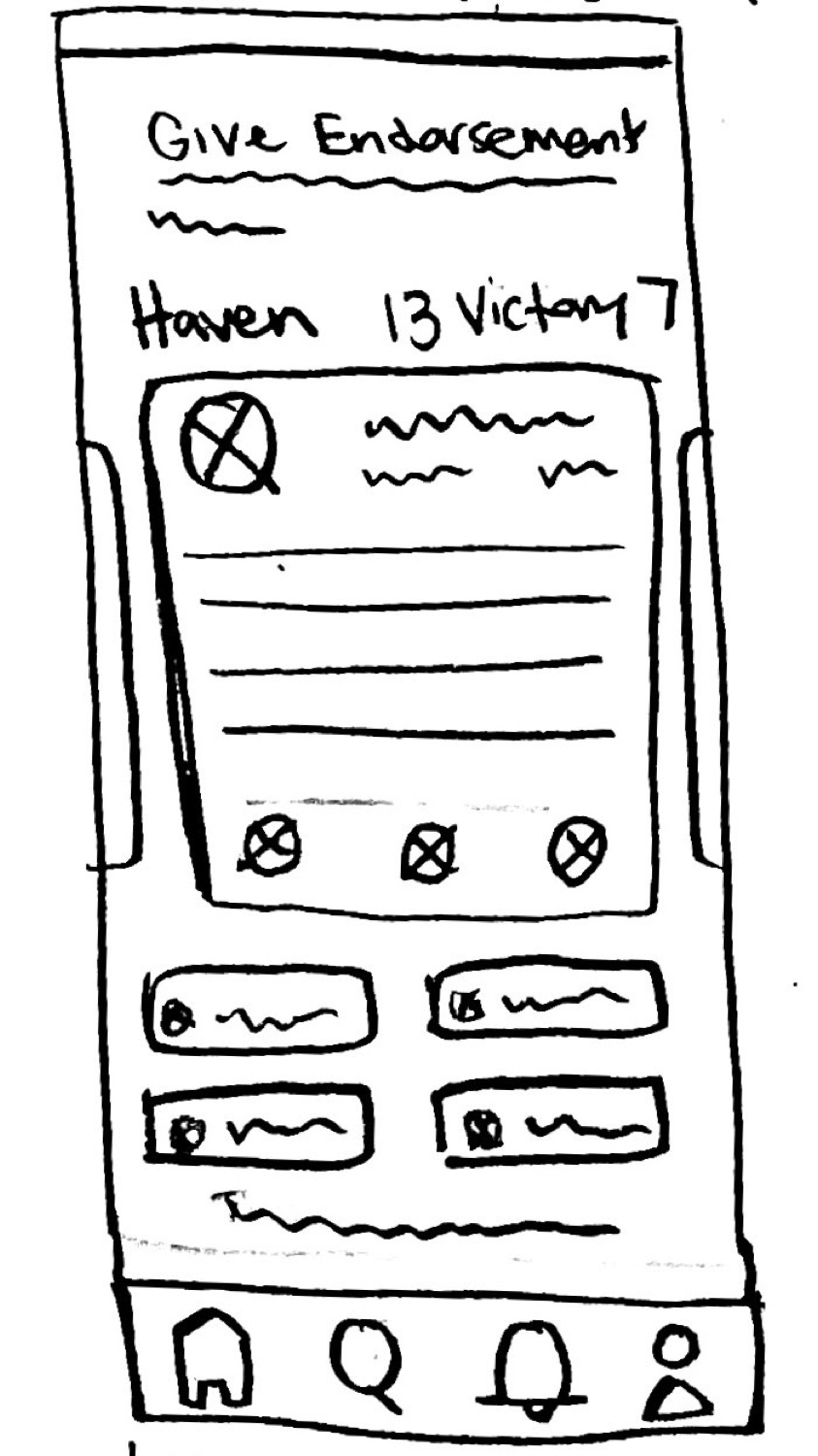
Exploring the structure on paper
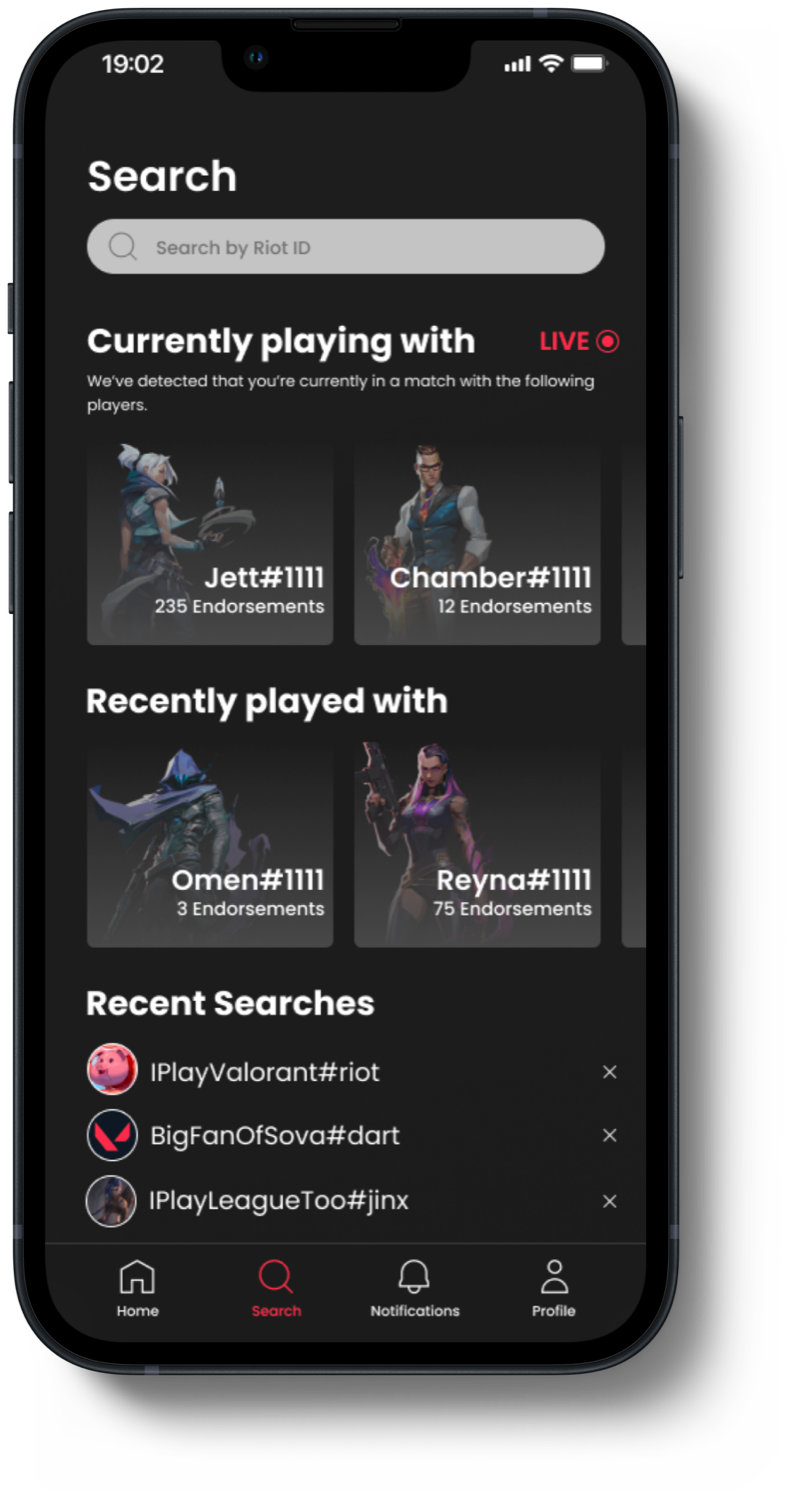
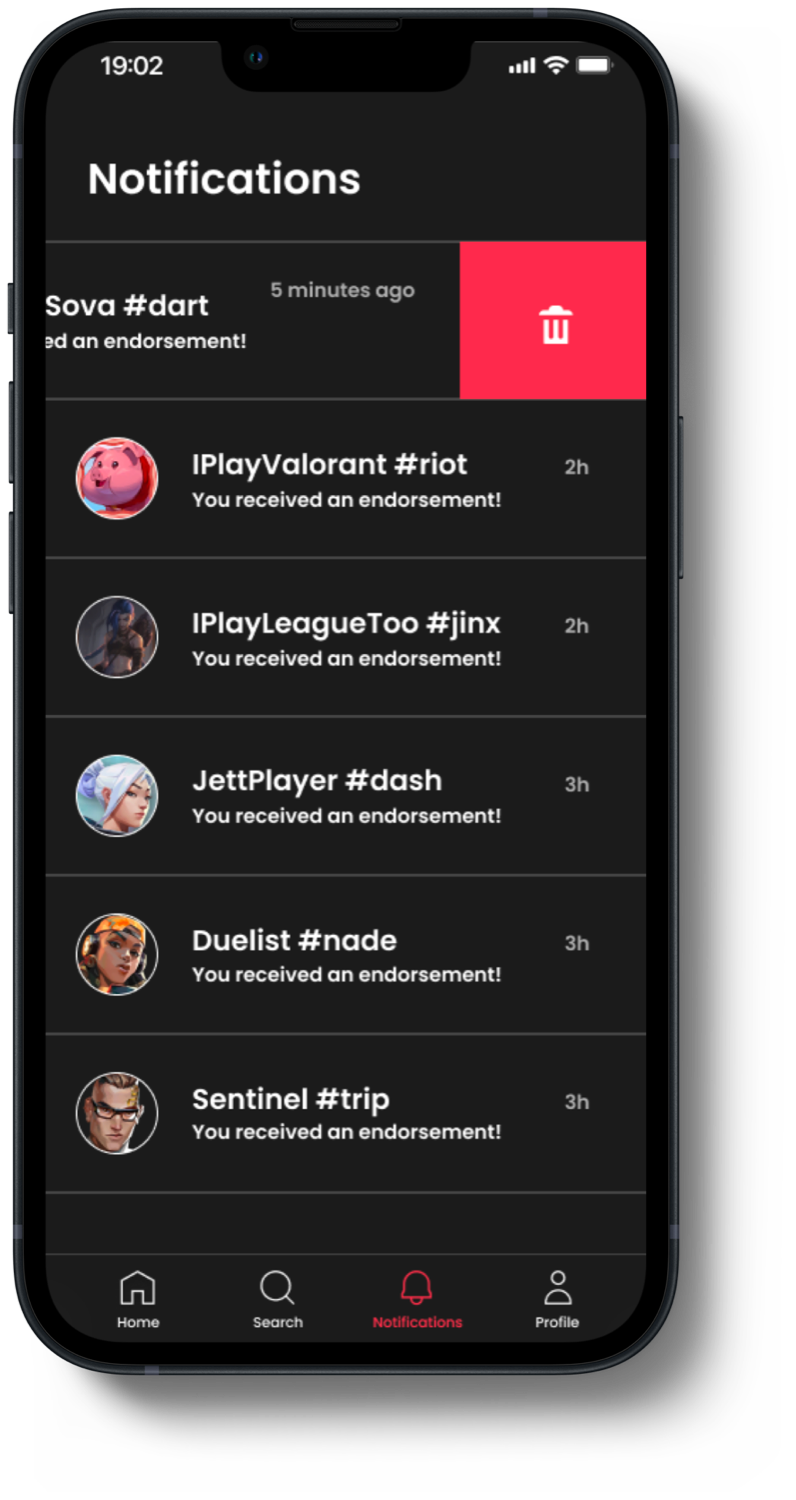
Bringing ValoRep to life
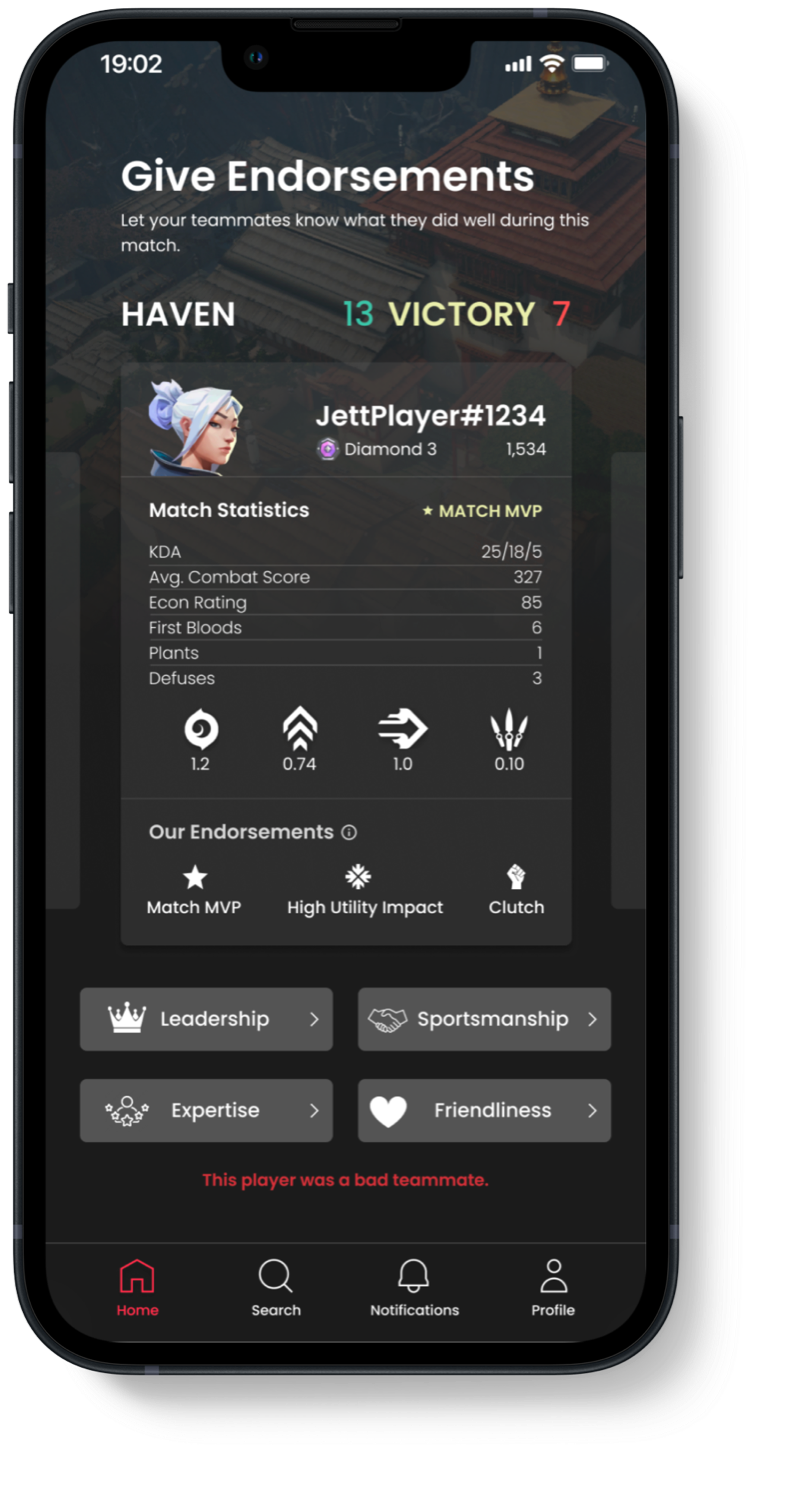
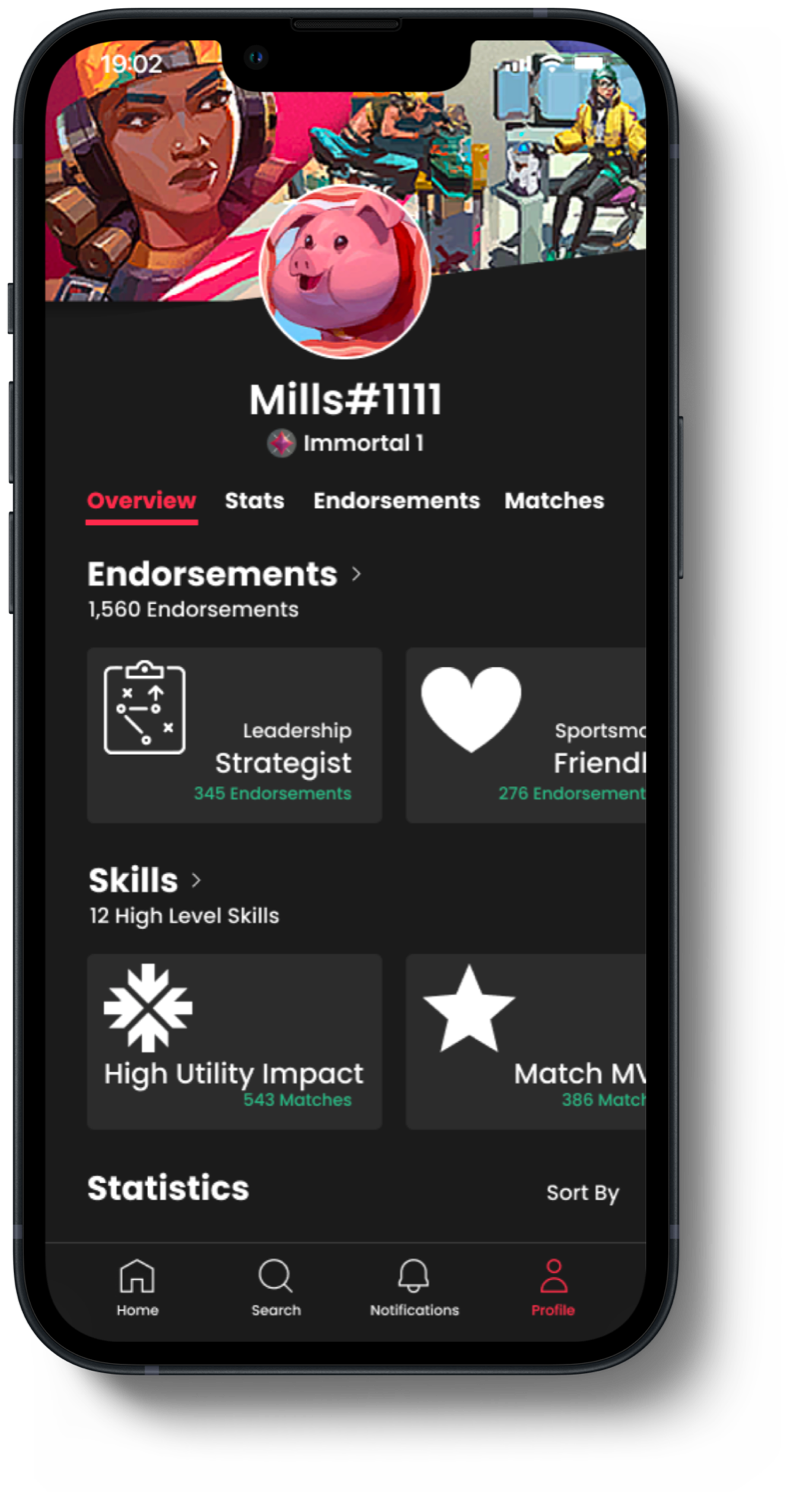
Simplifying the "Give Endorsements" flow
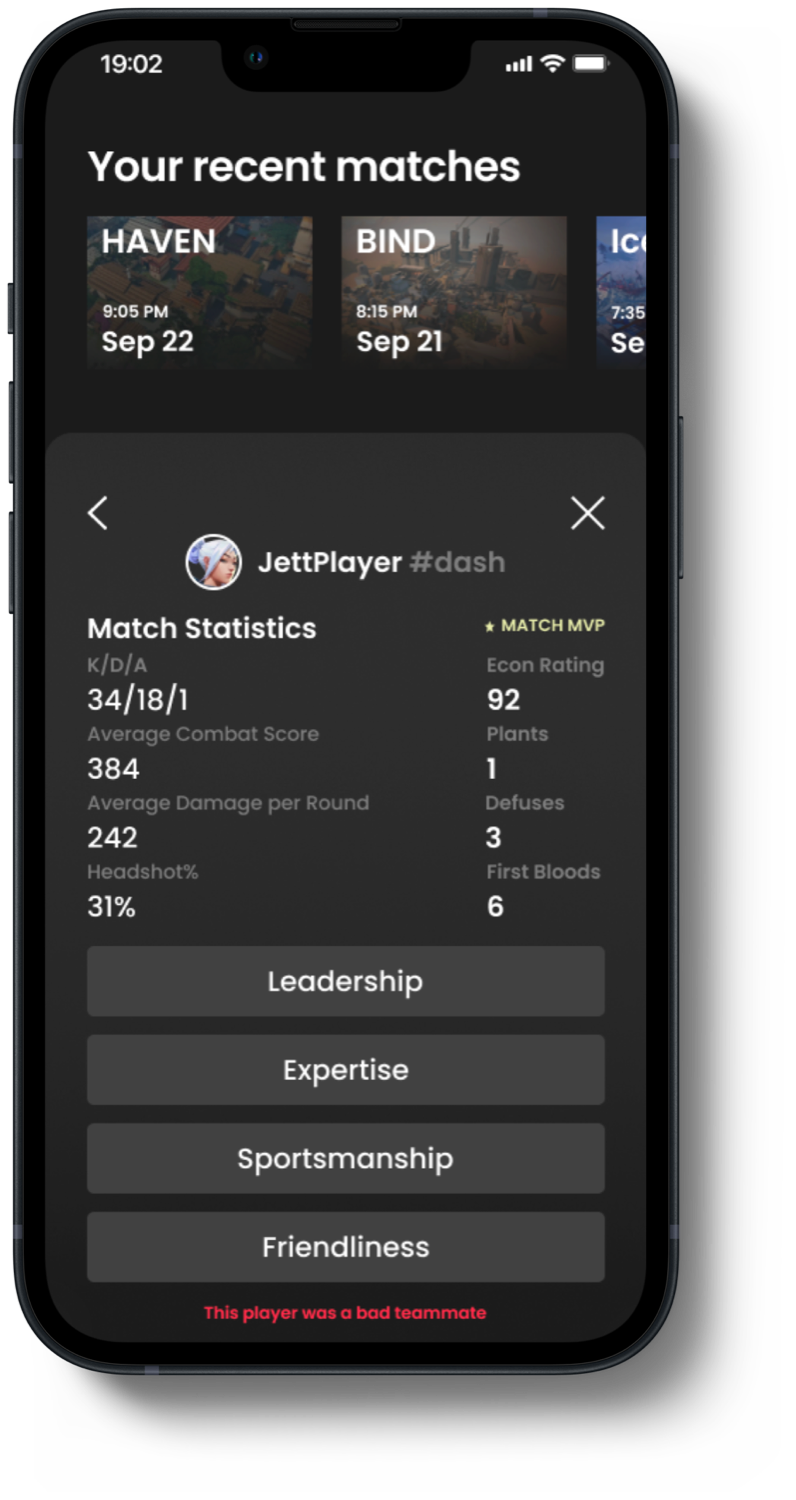
After receiving feedback on the initial wireframes, I learned that users found the "Give Endorsements" screen confusing and overwhelming. Specifically, they had trouble accessing the screen and were concerned about how to reach older matches, and they felt the information on the screen was too dense. In response, I made two revisions:
Added a clear entry point
I added an entry point for the "Give Endorsements" screen in the form of a "Recent Matches" carousel, giving users a clear way to access the screen and revisit older matches.
Restructured into an L1 / L2 hierarchy
I created an L1 and L2 screen structure: L1 displaying a match overview, and L2 displaying a specific teammate's match overview and endorsement options. This simplifies the information and reduces density throughout the screens.
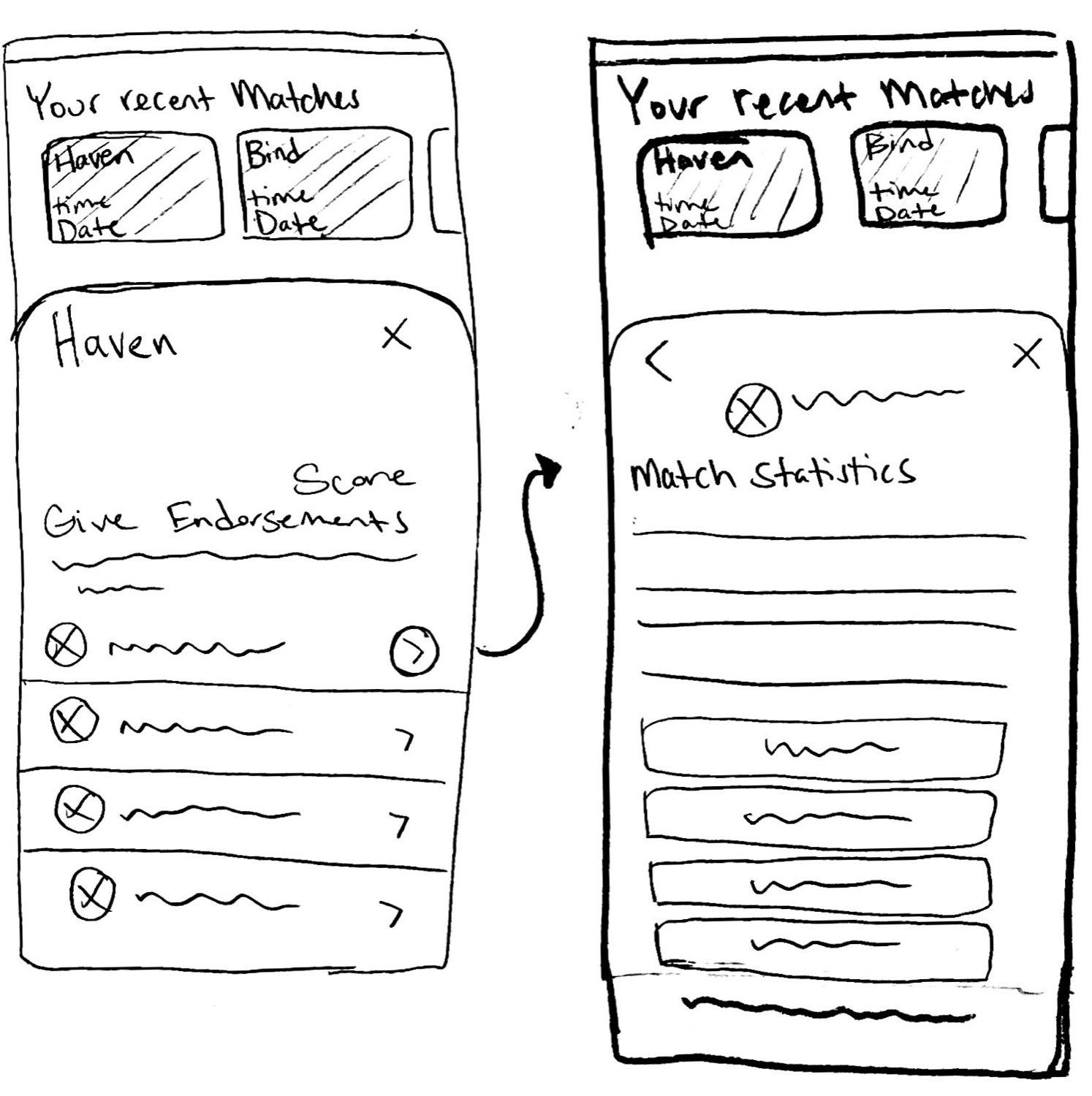
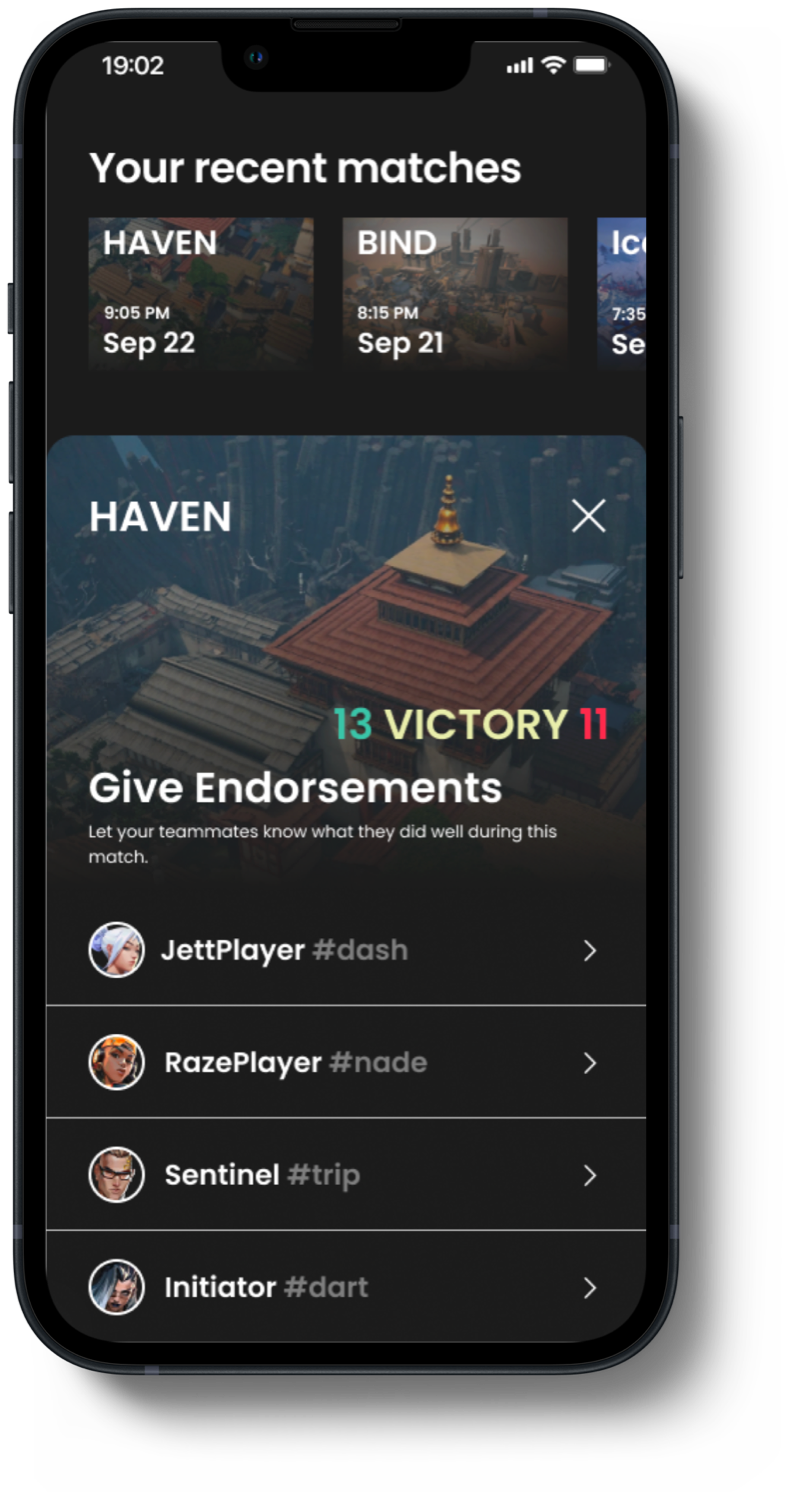
Where ValoRep could go next
Ideally, Valorant would implement its own endorsement or reputation system, but there are still a ton of opportunities for an external application to thrive in this space. For example, ValoRep V2 could include a system that allows highly endorsed users to review videos of hackers or toxic players (similar to CS:GO's Overwatch system discussed earlier). Additionally, players looking to enter the competitive scene can use their profiles as an additional resource for professional or competitive teams to consider.