Booz Allen Hamilton
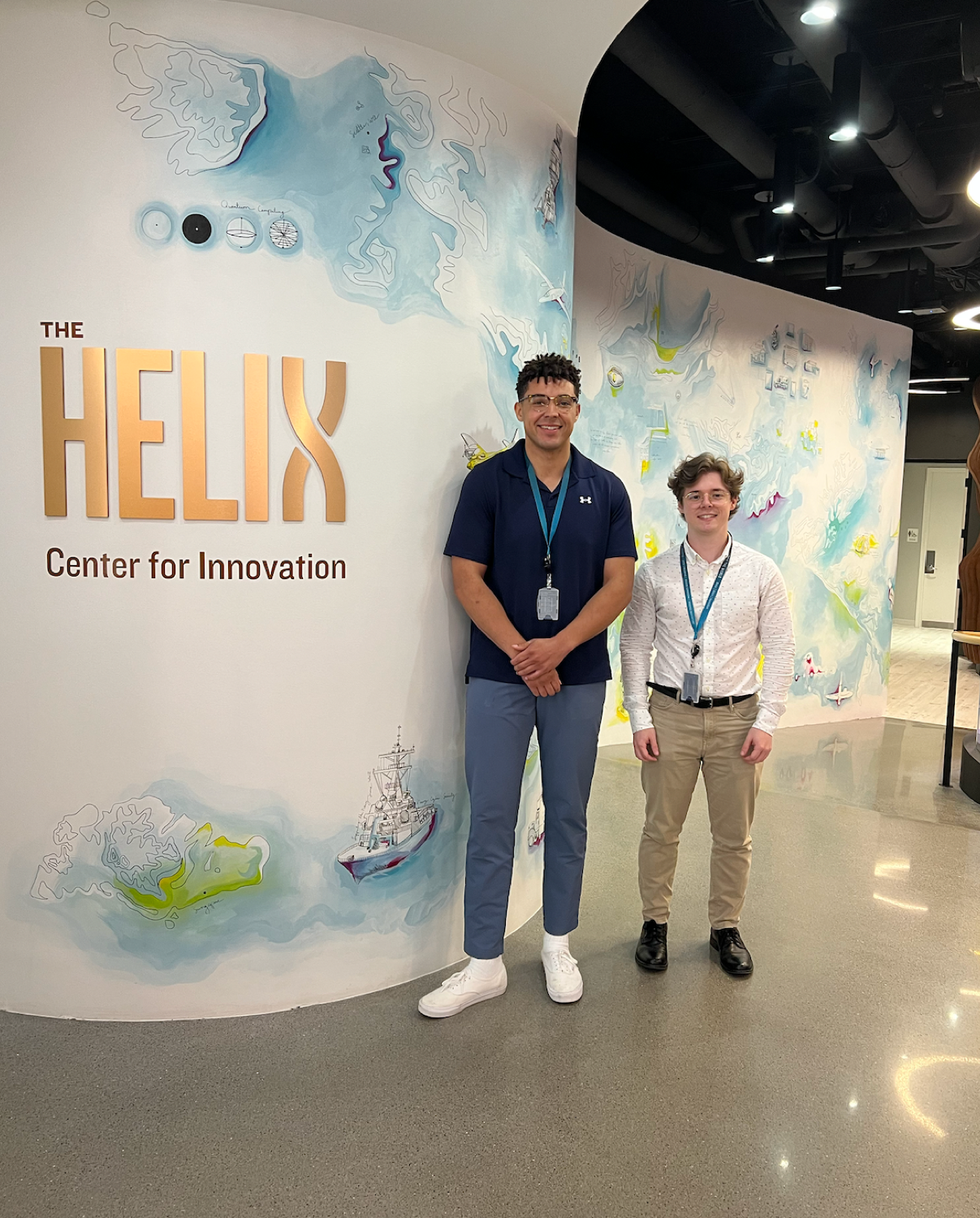
Championing the user experience across research, design, and strategy at The Helix, Booz Allen's Center for Innovation.
A note on confidentiality: Not all of the designs and work from this project can be shared publicly. If you'd like to learn more about my experience, feel free to email me.
Advocating for users across every project
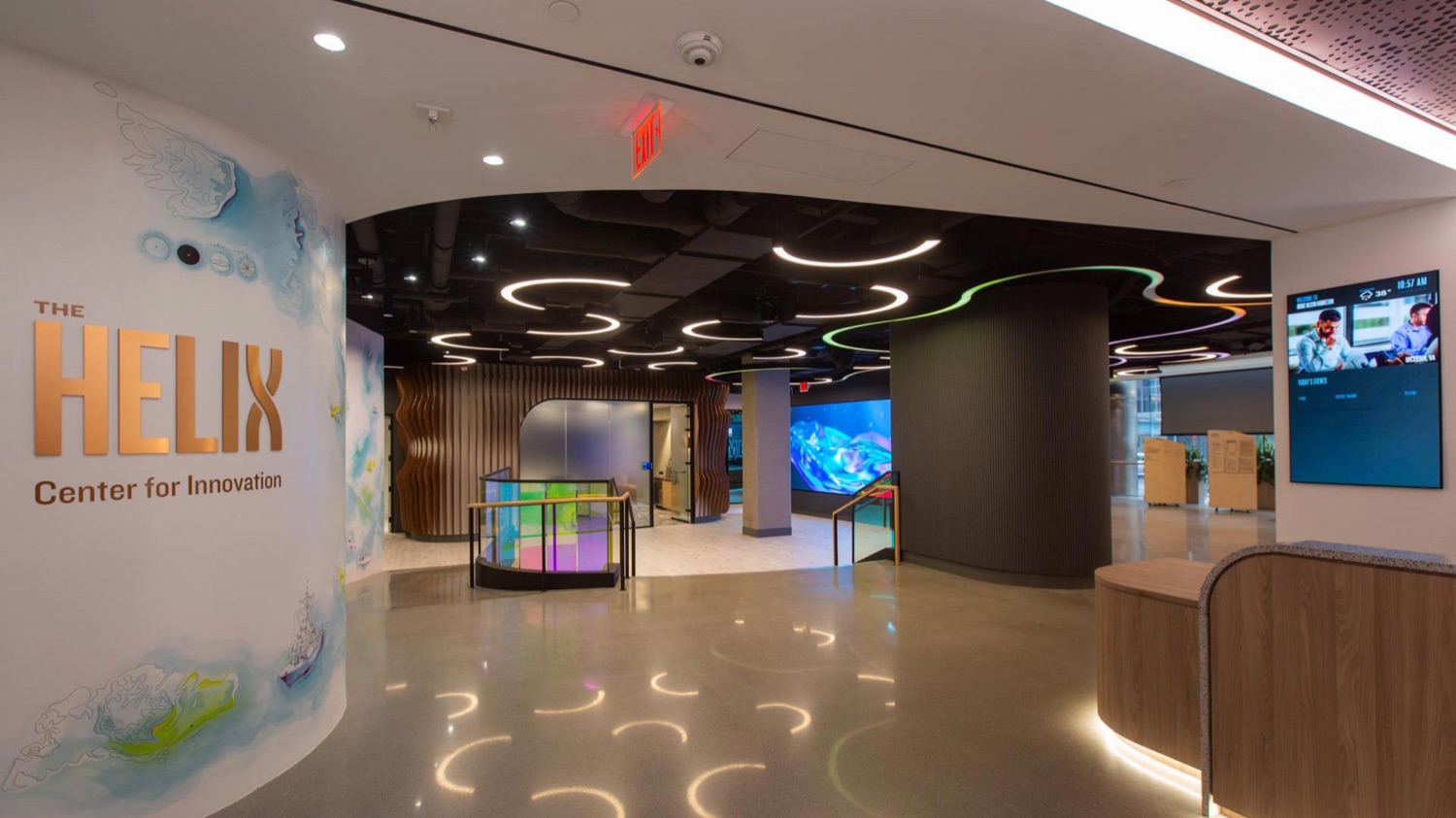
During my internship at The Helix, Booz Allen Hamilton's Center for Innovation, I championed the user experience by advocating for users on multiple projects as a researcher, designer, and strategist. The Helix's showroom is designed to immerse customers and partners in various interactive demos, simulations, and hands-on activations by displaying cutting-edge technology and solutions for real-world problems across various sectors and domains.

Designing the Digital Battle Space activation
As a UX/UI Designer, I was tasked with spearheading the end-to-end design process of the Digital Battle Space activation. The project's requirements were to create a hands-on interactive experience on iPads using Figma's prototyping capabilities for guests to use while touring the space to better understand Booz Allen's work in artificial intelligence, technology, and defense.
After being briefed on the project's goals and constraints by leadership, I led initiatives by conducting a SWOT analysis on existing solutions used in showrooms and museums, followed by rapid ideation sessions. Once I created a flow chart to better understand the user's journey, I built a low-fidelity wireframe prototype to test and present to leadership for approval. After receiving feedback, I iterated on the original design to improve navigation and include more interactive components and animations. Next, I began to create a high-fidelity design using colors, typography, graphics, and components that matched the branding of The Helix to create a cohesive design with the physical space. After I finished designing the various screens, I began prototyping and animating the interactive components and flows to test on real users. I scheduled and conducted in-person user testing in The Helix to get a feel for how users would interact with the product in the physical space.
Users expressed their enjoyment while interacting with the iPads and were extremely impressed with the intuitive navigation, responsive animations, and overall aesthetics of the UI. The final designs are currently creating an impact by aiding The Helix staff in providing guests with an immersive, hands-on experience during tours and events held within the space.
Turning qualitative insight into design decisions
In my role as a UX researcher and strategist, I supported various projects by orchestrating both remote and in-person usability testing endeavors. My primary objective while conducting research was to gather qualitative insights from internal users to facilitate and inform iterative design changes. This involved initiating communication with users via email to secure testing slots, utilizing Calendly for seamless scheduling, and crafting comprehensive usability testing scripts using Microsoft Word.
During testing sessions, I guided participants through the scripts and synthesized their feedback into cohesive affinity maps in Figma. I then summarized the findings into informative slide decks, effectively presenting them to leadership for informed decision-making and recommending targeted design changes to meet users' needs and ensure best usability and accessibility practices.
By meticulously analyzing insights gathered from these testing sessions, I played a pivotal role in driving iterative design improvements aimed at bolstering interactivity and engagement, significantly enhancing the overall user experience of the products offered within The Helix.
A note on confidentiality: Not all of the designs and work from this project can be shared publicly. If you'd like to walk through it in more detail, feel free to email me.
Making a static exhibit hands-on
During my internship at The Helix, I pitched and led the end-to-end design of an interactive iPad experience for the Digital Battlespace, one of the space's largest activations. The goal was to turn a mostly static exhibit into something visitors could explore at their own pace.
The Helix and the Digital Battlespace
The Helix is Booz Allen's Center for Innovation in Washington, DC. It showcases the company's work across AI, 5G, space, and defense to a steady stream of visitors, from employees and government clients to partners, investors, and media. Each experience throughout the space is called an activation.
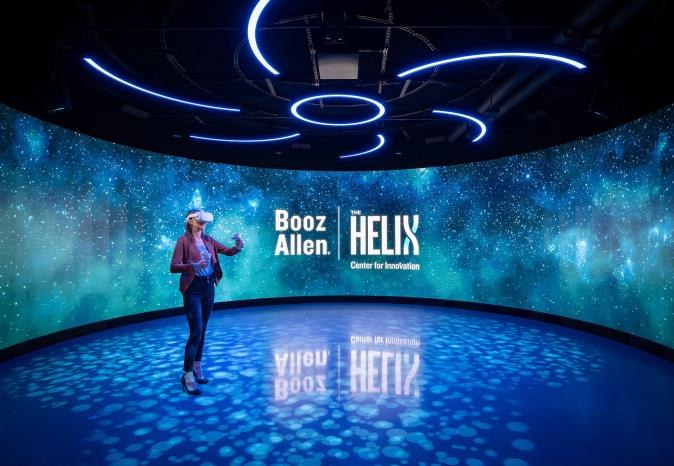
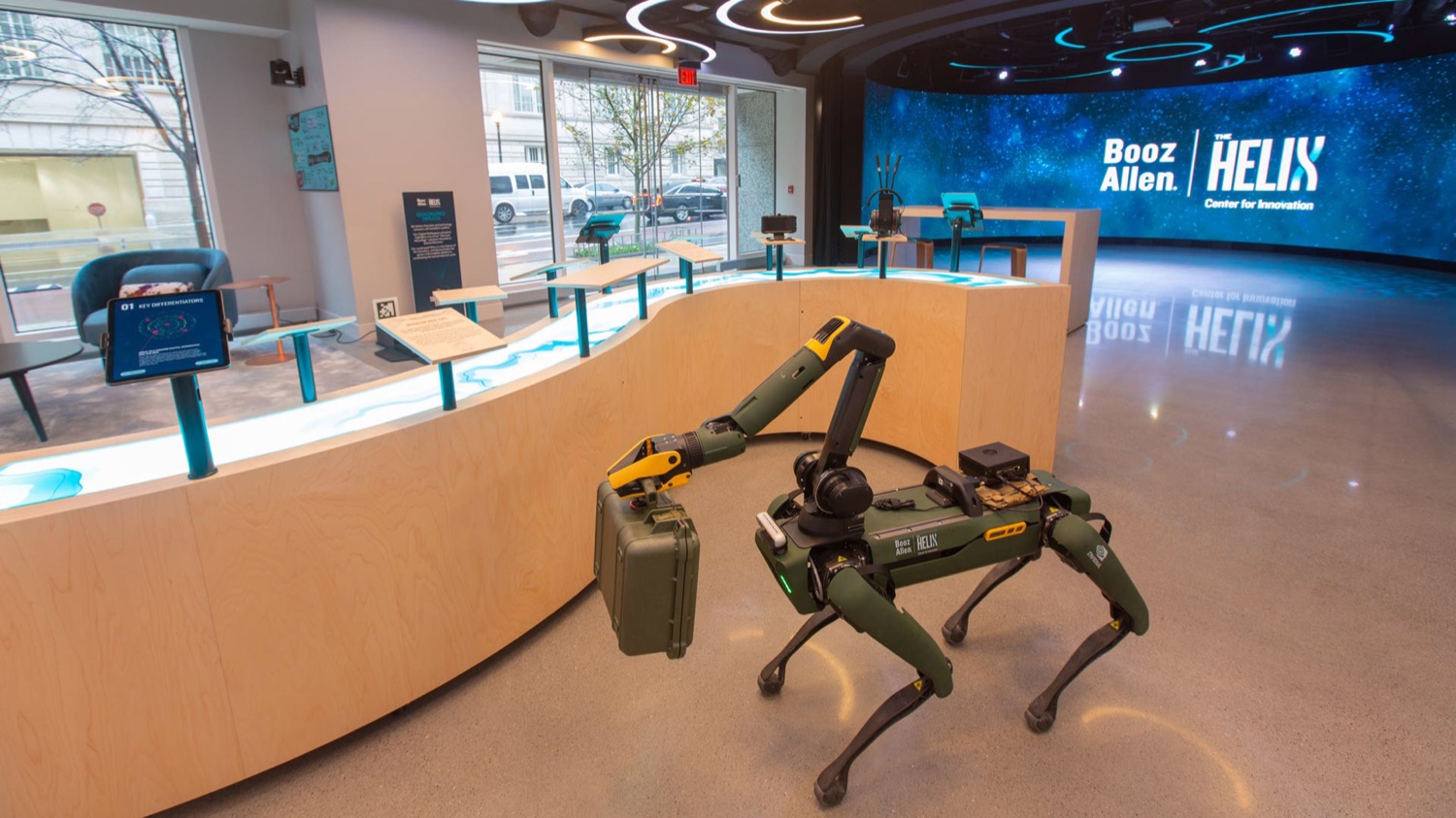
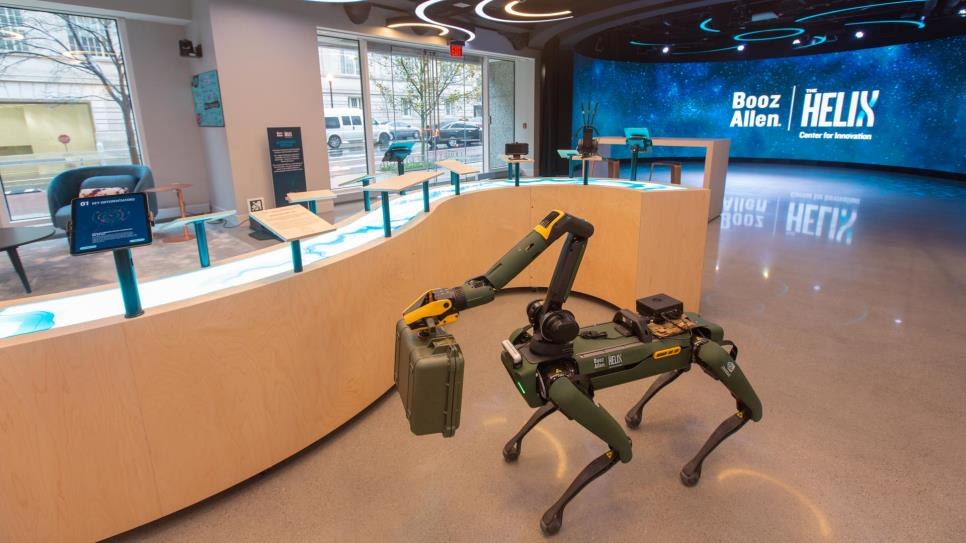
The Digital Battlespace is the second largest activation at The Helix, focused on emerging technology in AI and the military. It features live demos of Wilco, an AI-powered Boston Dynamics SPOT robot, along with iPads stationed throughout the space to give visitors more information as they explore.
Finding the opportunity
Before designing anything, I took time to learn the space. I attended tours, observed how visitors behaved at each activation, went through existing resources and documentation, and pulled metrics from visitor engagement data. Two patterns stood out.
The Digital Battlespace saw the least engagement
Guests spent the most time in the AI studio and the least amount of time in the Digital Battlespace.
It was the only activation without an interactive layer
Every other activation had some form of an interactive digital experience. The Digital Battlespace did not.
Both patterns pointed to the same gap, and that gap became my opportunity.
Increase engagement with the Digital Battlespace by making its iPads interactive.
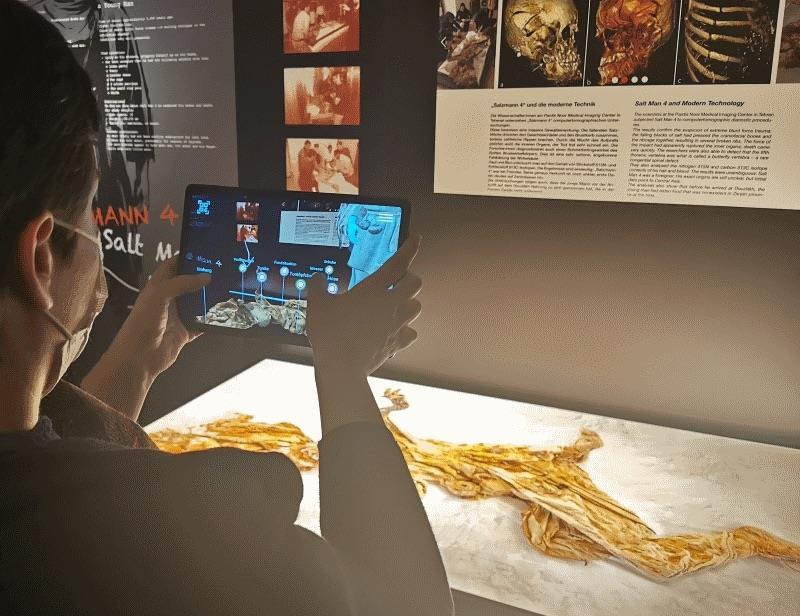
To ground the direction, I looked at how museums use tablets as educational devices for guests, especially during school trips, and drew inspiration from those patterns.
From low fidelity to a reusable system
I started with brainstorming sessions, sketching, and whiteboarding, then translated the strongest ideas into low-fidelity designs to map out the structure and flow.
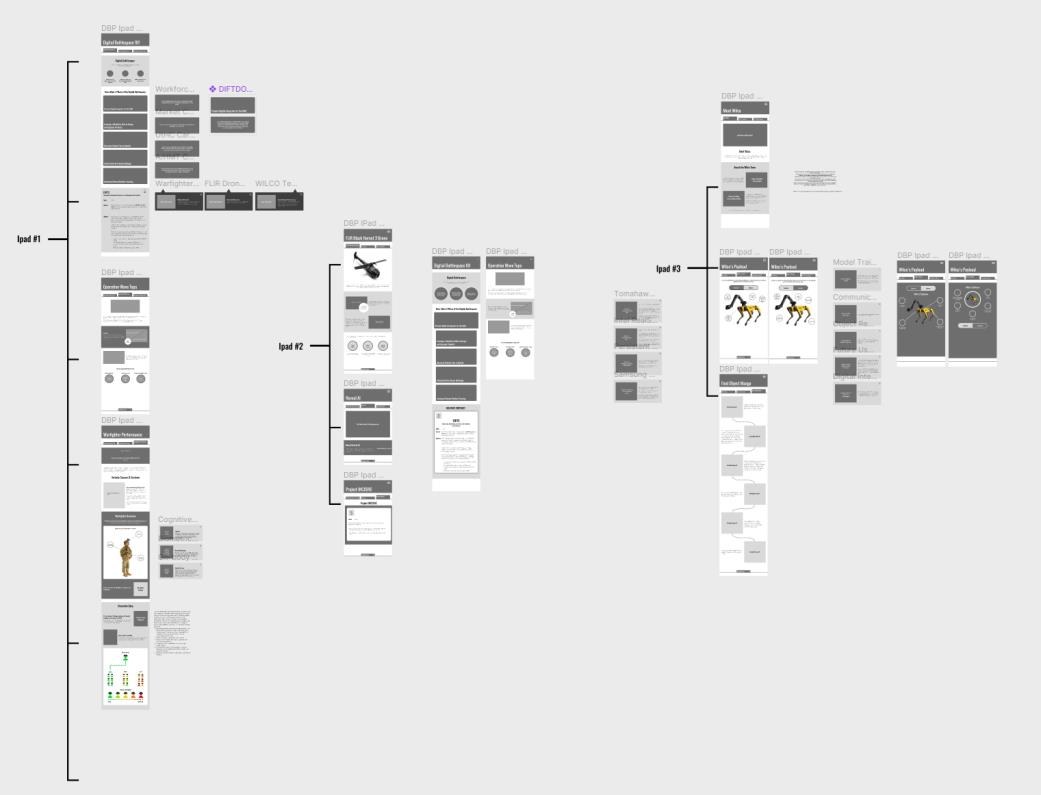
After a round of feedback, I moved into high-fidelity designs, refining the layout, interactions, and content into screens that felt closer to the final product.
High-fidelity screens
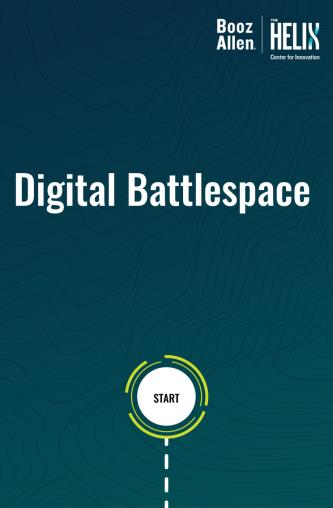
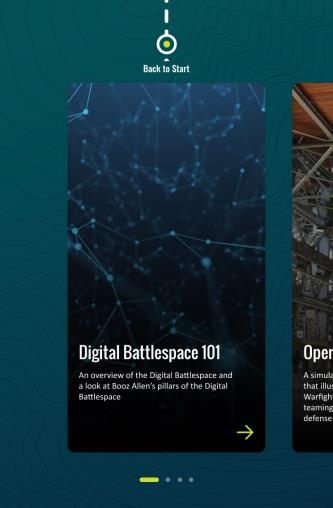
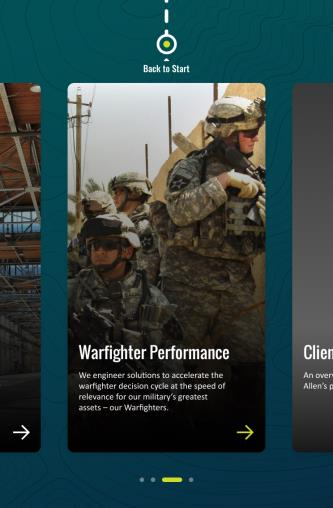
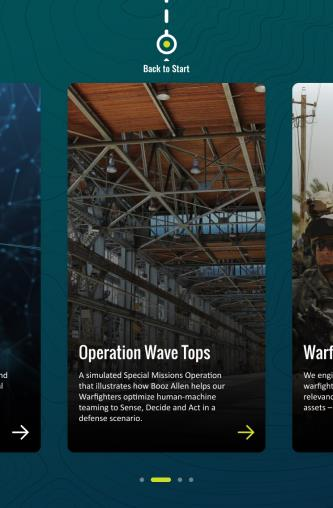
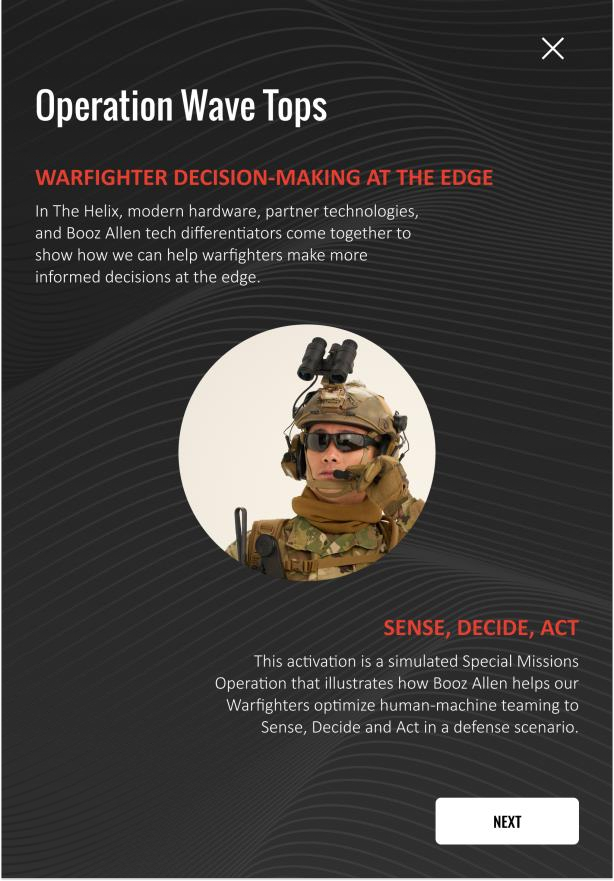
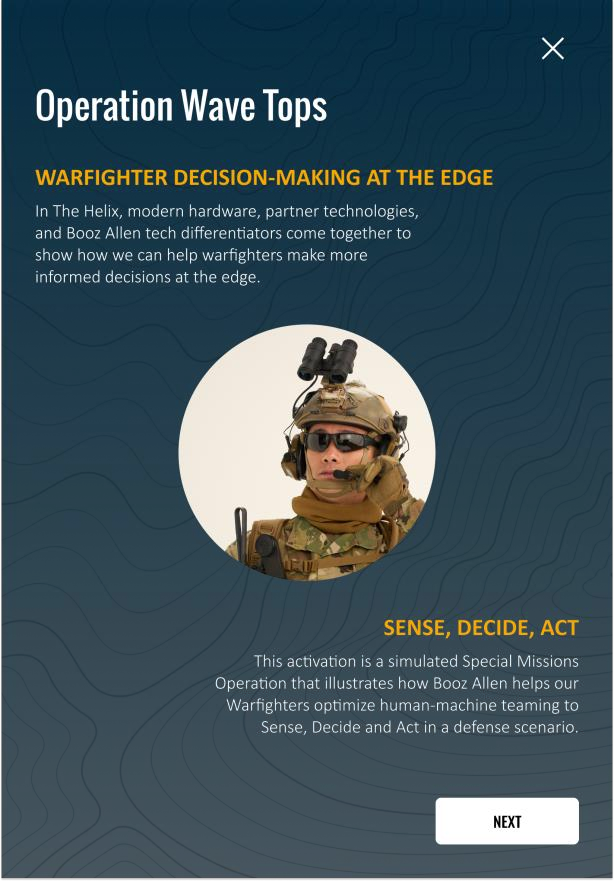
To keep the growing set of screens consistent, I built a reusable design system with colors, typography, and components that matched The Helix's branding, so the digital experience felt cohesive with the physical space.
Exploring the visual system

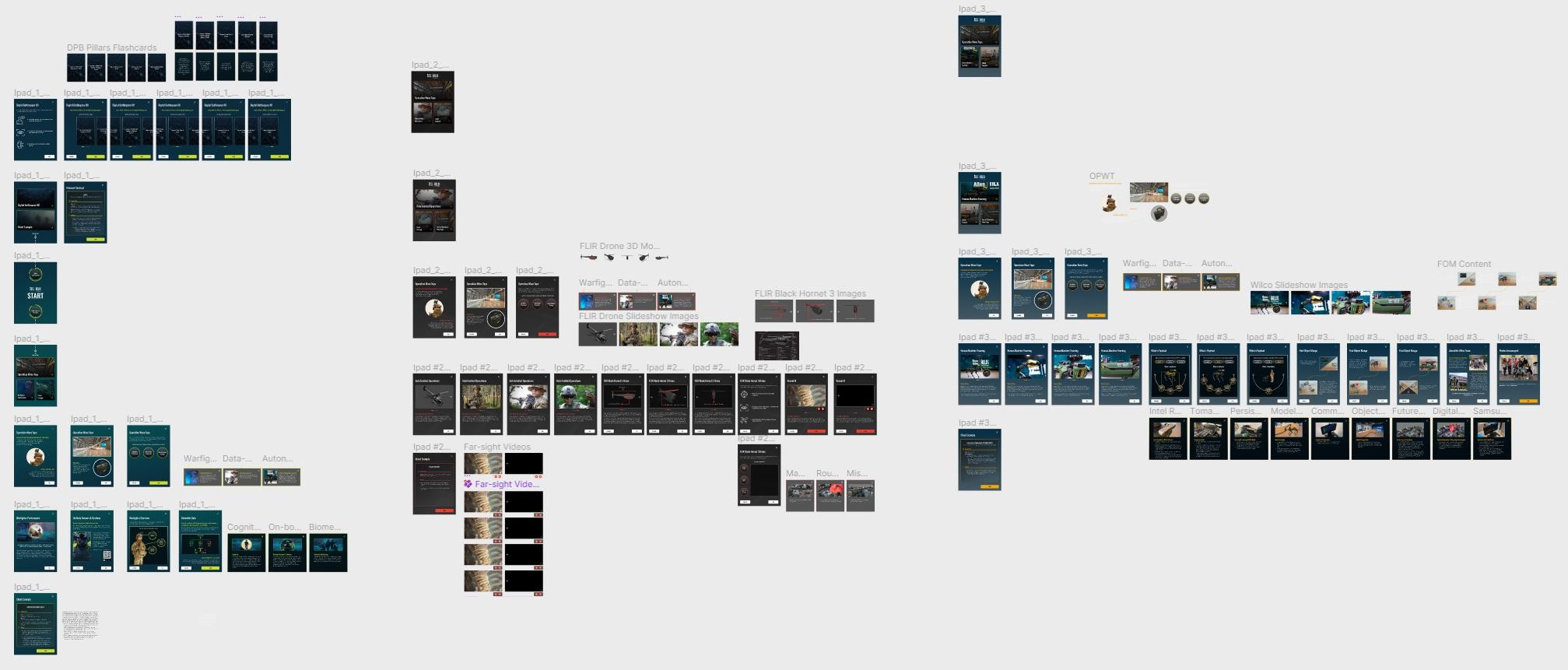
From there, I brought everything together into a fully prototyped, interactive experience ready to put in front of real visitors.
Testing with real visitors
I scheduled and ran in-person usability tests with visitors in The Helix itself, so I could see how people would use the iPads in the actual physical space. I then synthesized their feedback into an affinity map to surface the themes.
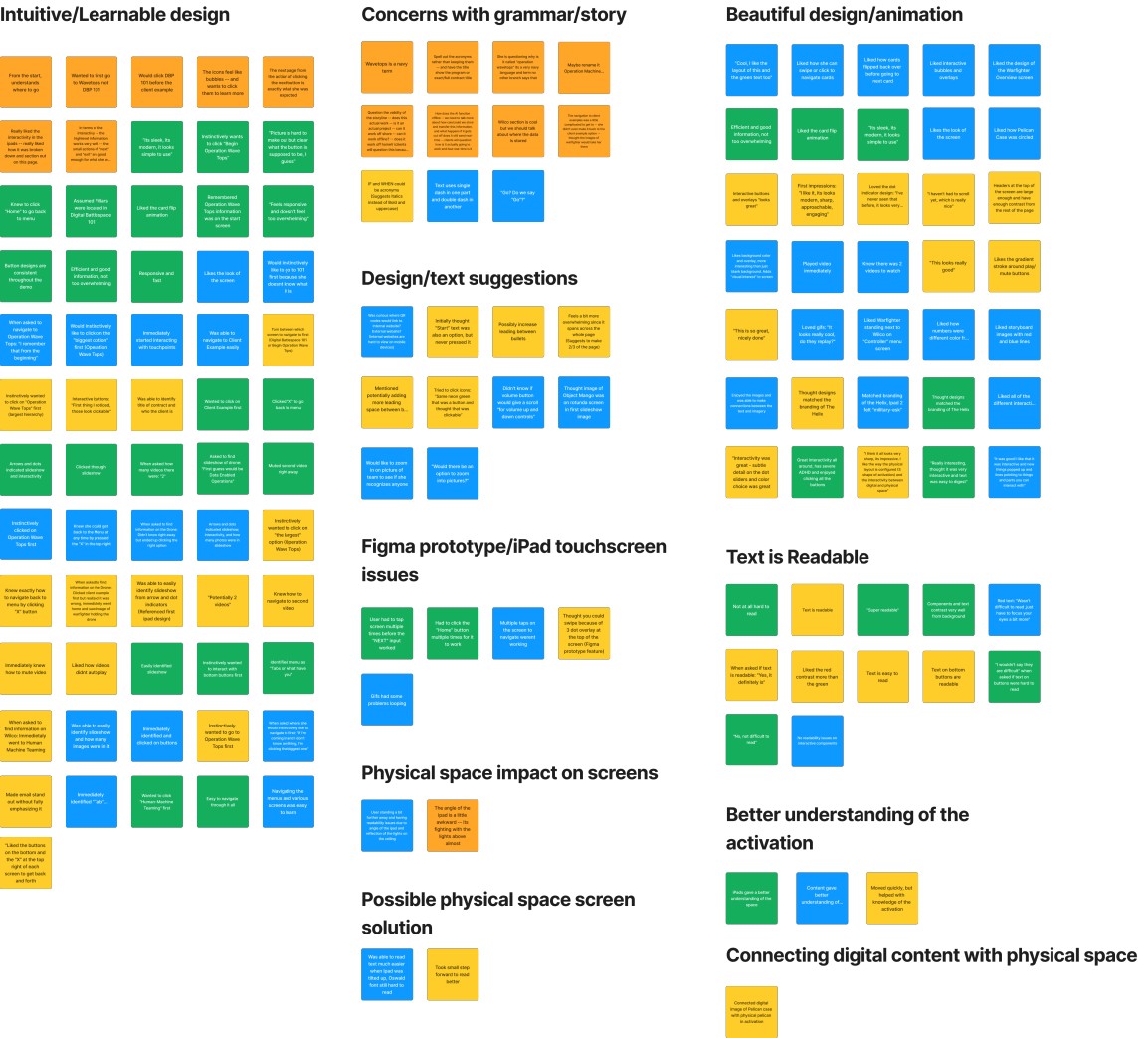
What worked
Room to improve
Three interactive stations
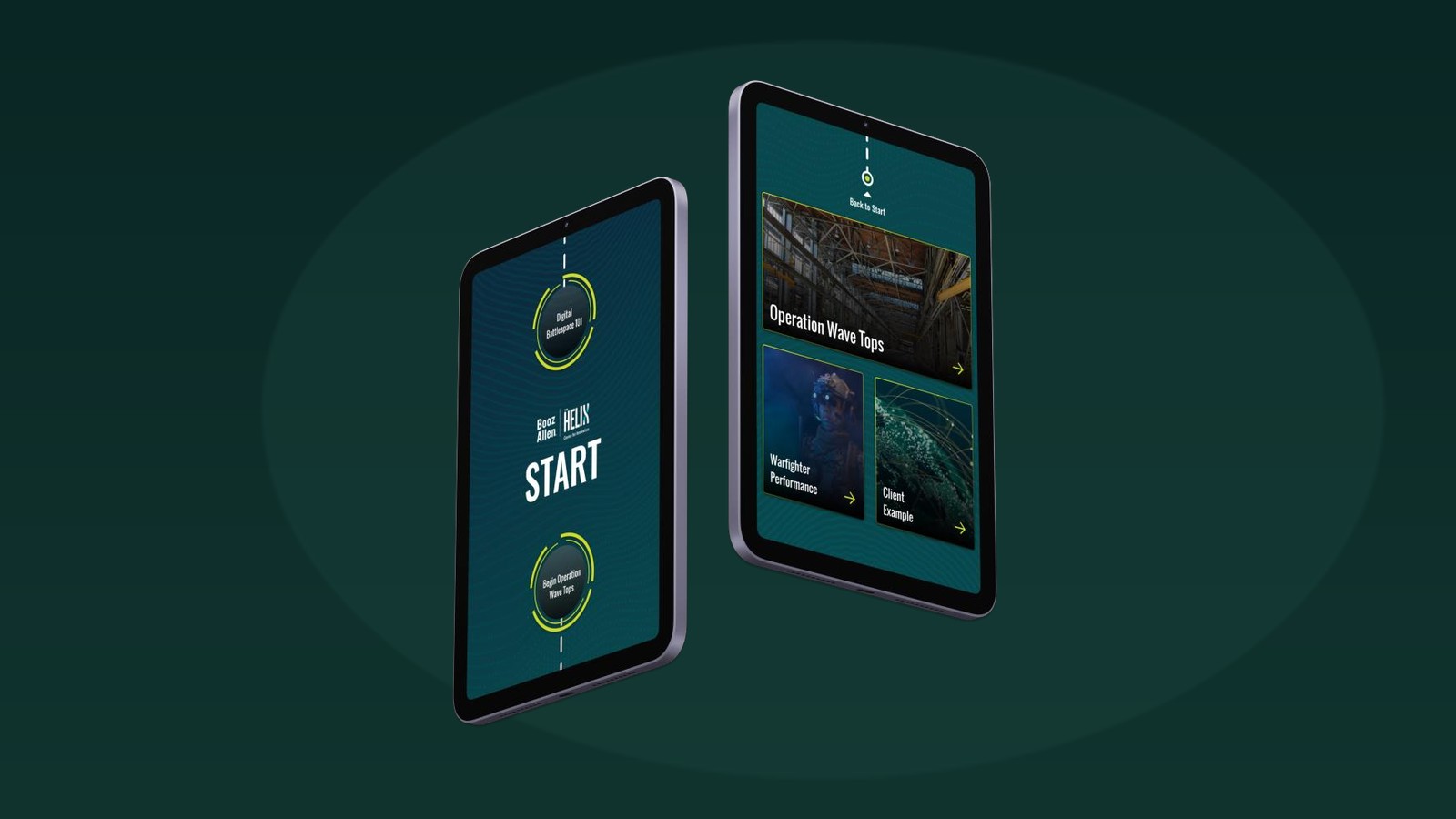
The final experience lived across iPads stationed throughout the Digital Battlespace, each with its own flow: a Digital Battlespace 101 introduction, an Operation Wave Tops mission walkthrough, and an explorer for Wilco's hardware, software, and controllers. Together they let visitors dig into the technology on their own, at whatever depth they wanted.
Interactive iPad flows
The designs went on to aid The Helix staff in giving guests a more immersive, hands-on experience during tours and events held within the space.
Learnings and looking forward
Iterate, iterate, iterate. My project evolved enormously over the three months I worked on it. Every design review, usability test, and piece of feedback revealed another opportunity to improve the design.
Measure success. Having a clear way to measure impact matters. It is how you understand whether a solution actually addressed the problem you set out to solve.
Working with a team beats working solo. I loved getting to collaborate with others to brainstorm ideas, learn from each other, and build on each other's thinking.
UX really does make a difference. This was the first time I got to see my designs have a real, positive impact on real people.